“Comparison is the thief of joy.” – Former President Theodore Roosevelt
There’s always going to be someone out there who you think you could be just like or do better than, etc. and they may think it’s hurting them or their likeness. But in reality, the person who’s hurting is actually you. And those people who are looking up to you or looking to you are also missing out from you being you. Today, more than ever, I feel like people are trying to fake being authentic, because they are scared to show their authentic self.
How To Be Your Authentic Self: My Story
For a long time, I thought that I needed to be more like the “successful” people we see in media, or those who live and work around me in the world. So I completely took out my own personality and everything that makes me, me, and then I never got to share who or what I’m about. I was being the fake me, and trying to fit in with those that I THOUGHT I needed to be like.
I eventually learned to stop that and let my true self and colors shine. And you know what happened? People actually connected with and listened more than before! I was living in my authenticity and actually creating real connections. Not those inauthentic connections I had previously.
Tips on How To Be Your Authentic Self
Listen, there are so many times where taking the high road and acting like someone else versus living in your authenticity will feel better. But in reality, the growth comes in being vulnerable and opening up. That’s where real human connection happens. Here are a few ways you can be authentic and check yourself when you think maybe you aren’t being authentic.
Know who you are.
This is such an important one, and an absolute MUST to continue on down the line. It’s important to figure out the good, the bad, the ugly, and determine what parts of those you want to be a part of your personality. These are things that you would tell your family, your best friend, and what they know you for and can expect from you. There are also times where new things might pop up that you need to know how and if you want this to be part of your authentic self.
Trust yourself.
You know yourself better than anyone else. Trusting yourself and what made you is one of the key components to being your authentic self. You need to listen to your intuition, make decisions with confidence, and learn from your past mistakes. Listen to what your gut is telling you and follow along confidently. You can trust yourself because YOU know better than anyone who you are. You got this!
Learn how to meet your own needs.
When it comes to learning how to meet your own needs, you need to know what they are. Take time to reflect on what you truly need and how you can give yourself these things. Do you need space? Rest? Time to connect with your creativity? It’s really important to identify these things to give yourself the best chance at authenticity. Your needs must come first.
Give yourself space.
Sometimes, space is all you need to connect with who you are and become your authentic self. Schedule regular time for yourself to reflect and recharge, away from any distractions. You can do things like go on a nature walk, do some mindful breathing, or even meditate. Do whatever YOU like to do, in your own space, on your own terms.
Learn to be uncomfortable.
This is the part where you need to be comfortable being uncomfortable and learn your strengths and weaknesses. To truly grow and find our authentic self, we need to find what makes us uncomfortable and be comfortable recognize it. When you stay too comfortable your whole life, you never allow yourself the opportunity to grow or change. Try something new, step out of your comfort zone, and really allow yourself to sit in and work through your feelings.
Set boundaries.
Ahh, the terrifying word. If you’re like me, which if you’re reading this blog you probably are, boundaries are hard for you to set. And I get it, it can be super uncomfortable setting boundaries in the fear you might upset someone. But if you don’t set boundaries, the person you’re upsetting is yourself. Create some important, non-negotiable boundaries and be clear about what you need to feel comfortable in relationships and situations. It’s more than okay to protect your time and energy.
Surround yourself with support.
Support can be a huge cornerstone when it comes to embracing authenticity and finding yourself again. Surround yourself with people who help you cultivate good habits and want you to be your authentic self. Get rid of people who are secretly hoping you fail, and spend more time with people who help you feel good and bring you back to who you are and want to be.
Stay open to growth.
Understand that growth is a hugely important part of life. Be open to embracing new challenges that will develop who you are as a person. Just make sure you check in with yourself often to reassess your values and goals. While you do have to grow as a person, make sure you consider your mental health and be gentle with yourself. Don’t get too caught up on a growth journey if you’re only mentally ready to go slow. It doesn’t have to be an overnight process.
Avoid comparing yourself.
Remember that everyone’s path is unique on a journey to authenticity. However, try your hardest not to compare your progress to others. Focus on your own journey and what you want to get out of it. Also be mindful of the media you consume. You should only follow content that inspires authenticity rather than perfection. You want to feel good, not feel overshadowed or unworthy.
Express yourself.
Use art, writing, or music as a fun way to express yourself authentically. Express yourself through authentic communication, things you enjoy, and new challenges.
Quotes About Being Your Authentic Self
“Be yourself; everyone else is already taken.” –Oscar Wilde
“The privilege of a lifetime is to become who you truly are.” –Carl Jung
“You were born an original. Don’t die a copy.” –John Mason
“To be yourself in a world that is constantly trying to make you something else is the greatest accomplishment.” –Ralph Waldo Emerson
“The only way to live is to accept each minute as an unrepeatable miracle.” –Jack Kerouac
“Authenticity is the daily practice of letting go of who we think we’re supposed to be and embracing who we are.”– Brené Brown
“Just be yourself. Let people see the real, imperfect, flawed, quirky, weird, beautiful, and magical person that you are.” –Mandy Hale
“The greatest challenge in life is being yourself… in a world trying to make you like everyone else.” –Unknown
“Your time is limited, so don’t waste it living someone else’s life.” –Steve Jobs
“It’s not what we have that will make us happy, it’s who we are.” –Margaret Fuller
Do you want to become your authentic self?
Being your authentic self can seriously change your life. You’ll worry less about what people think and spring out of bed eagerly every single morning. By following the tips above, you can get on the road to being who you truly want and NEED to be at heart. I hope that reading my story helped you, and if you’re interested in reading more, make sure you check out my blog!
I’ve read somewhere that we become what we repeatedly do. And I agree, but full disclosure, I have habits that I’m proud of, and there are those that I want to get away from. But, as we all know about bad habits, sometimes they’re just so hard to break. Habits can be good or bad. Whether it’s the food we love, the exercises we do, the way we drive, how we spend our weekends, or retail therapy, if it’s something you do routinely, then it’s a habit.
To change something in your life means incorporating habits into your routines. Sometimes it’s to change direction in your professional or personal life or the quality of your lifestyle that propels you to cultivate new habits. Habits are formed by doing it repeatedly, consciously, and subconsciously.
There’s a 21/90 rule claiming that to make a new habit, it takes 21 days, and for it to be a permanent lifestyle change will take 90 days. You have to be committed to these changes. According to research, about 40% of daily activities are performed daily by people in quite similar settings and situations. In a session at the American Psychological Association’s 122nd Annual Convention, Wendy Wood said that “We find patterns of behavior that allow us to reach goals. We repeat what works, and when actions are repeated in a stable context, we form associations between cues and response.”
Unlearning bad habits and learning new ones is essential because change is inevitable. It happens at the home, workplace, school, and digital space. Cultivating new habitual behaviors is required towards a new lifestyle, better, healthier, and more meaningful. The process can be tedious, but there are ways to make it easier. Here are what I do; personally, that helps me cultivate good habits.
How Can We Cultivate Good Habits
Be clear and focused with what you want.
Before doing anything, know what you want, your goals, your end game. Be clear of what you want to change in your life, and it should be for yourself and not for someone else. If you’re planning to change your diet, be specific about what you want to attain.
Is it to lose weight? Be physically stronger? Be mentally healthier? When your mind is all set on a goal, it’s easier to follow through with your planned changes. Be goal-oriented, and making decisions will be easier.
Use motivating rewards.
Changing habits can be daunting. Create a rewards system that will keep you motivated. Make sure that the rewards will not steer you away from progress. In other words, it should still be aligned with your ultimate goal. One example is rewarding yourself with lovely athletic wear if you’re able to maintain your exercise stats for two weeks. It is helpful, especially if you’re into a pretty workout outfit. It’s a simple reward that indeed makes you more motivated to work out.
Start simple.
The secret to getting ahead is getting started even in small increments. Taking the smallest steps in the direction you want is enough to say that you’re on the right track and who knows, it ends up being the most significant step in your lifetime. For example, to have a healthier eating habits, you can start with changing your breakfast routine by having fresh fruits.
Trust the process.
Cultivating new habits is a process, and that process is as important as your final goal. Hold your vision and trust the process. It’s essential to be patient with yourself as you go through every step of the change. Stay consistent in your faith that you can get through it, and things will work out the way they’re supposed to be.
Get rid of temptations.
Be mindful of what you surround yourself with. If you want to curb your spending habits, get rid of online shopping apps, unfollow online shops in your social media accounts, and unsubscribe to newsletters from your usual online shops. Curate your exposure to temptations and be consistent with them.
Get an accountability partner.
Tell someone who you trust so much, someone who will help you be accountable for your actions. They can give you extra motivation because knowing that your goals is acknowledged by someone else will push you to be consistent. Posting your plan somewhere also helps in getting accountable.
Tracking Your Progress
Knowing how you’re faring in your goals or new habits helps inconsistency. Keeping track of your progress means being purposeful. Whether they’re small or big wins, track it. When you see your results, you’re giving more meaning to what you’re doing, and it also gives you an insight into the value you’re adding to your life.
Good Habits to Cultivate
Read more.
Reading helps you have a new perspective of the world, regardless of the genre. Before sleeping or during your downtime, keep a book on your bedside table or your bag. Choose a book that resonates with your interest so it would be easy to build your reading habit. You can start to create a habit that instead of picking up your phone to mindlessly scroll, you instead pick up a book and enjoy some nice pages.
Eat a balanced diet.
Make some changes to your eating habits. Eat more organic food and make sure you’re drinking enough water. Even drinking a glass of water with breakfast, lunch, and dinner is a great way to make a simple change. You can check with a nutritionist to see which diet works for you best. Even if you’re not ready to take a massive leap yet, just be gentle with yourself and opt for small changes like adding more meat and leafy greens to your diet and avoiding sugar or any nasties that might make you feel worse.
Exercise regularly.
Take some time to exercise in your daily life. It is massively beneficial to your mental health and helps in having a better sleeping pattern. The first step towards a healthy lifestyle is to just get out there and get going. Whether you go for a five minute walk or a ten mile run, you will be making a massive difference in your life. Even five minutes of yoga or gentle breathing is a great way to create a healthy habit.
Establish a positive mental attitude.
Establishing a positive mental attitude is extra important in every aspect of your life, especially when it comes to creating positive habits. Developing a positive mental attitude makes you see things differently. It also helps you control your stress levels and indulge in healthy habits. A positive mental attitude, even if you fake it til you make it at first, will eventually become the real deal and help you live a much better life with good habits.
Embrace change.
Change always happens, it’s part of life, but of course, it doesn’t mean that it’s easy to embrace some of those changes. Since the future is uncertain, make sure to learn how to adapt so you’d be able to add value to your life and the community.
Take time.
Prioritize yourself. You can’t pour from an empty cup, so spend some time yourself and do what makes you happy. You need to take time to really invest in YOU. If you need a little more time to start or more time to get going, don’t panic! Everyone has different timelines and not everyones life looks the same. Be gentle with yourself and give yourself plenty of time to make changes.
Take time to create positive habits in your life.
Cultivating new habits is part of self-care. To keep you motivated, just remember that you’re doing it because you want to have a better life. While it may seem hard at first, you need to have some faith in yourself, implement the tips above in your daily routine, and you’ll be well on your way to creating a habitually better life!
Have you been feeling stuck in a rut? Well, it may be time to hit the reset button and reinvent yourself. No one ever said life would be easy. It’s guaranteed to be tough at times. When you find yourself struggling and don’t know how to get back on track, it can feel like the world is against you. But don’t give up just yet! There is always a way to reinvent yourself and start fresh.
In this blog post, we will discuss some tips for starting over when life gets tough. I’ve got you covered with a step-by-step guide to total reinvention. Try to learn new skills, create a vision board, and set monthly goals. Remember to take small steps, step out of your comfort zone, and replace bad habits with healthier ones.
Don’t forget to love yourself along the way! So, are you ready to take charge of your personal growth and create the best version of yourself? Let’s do this!
How To Start Your Life Over And Reinvent Yourself
Starting over can be tough, but learning to love yourself isn’t impossible. You’ve got to be your own hype person and acknowledge that you’re capable of so much. Once you’ve got that down, take some time to reflect on what you want out of life – what makes you happy? What gives you purpose? Use those answers to set some goals and chart a new course. Don’t be afraid to step out of your comfort zone and try new things. Remember, starting over isn’t about erasing your past; it’s about embracing the present and creating a better future. So go out there and rock it – you deserve it!
Tips for Starting Over and Reinventing Yourself
The new year is a time when many of us feel inspired to start over, although we can start over any time we want. We may have failed to meet our goals in the past, or we may simply be ready for a fresh start.
Whatever the reason, starting over can be a precious gift. It allows us to let go of old baggage and start living the life we truly want to live. However, starting over can also be difficult and overwhelming.
If you’re not sure how to start, here are a few tips that can help you rebuild your life.
Take a break.
Sometimes we need to take a break from our lives to recenter ourselves. This could mean taking a vacation, going on a retreat, or simply spending some time alone in nature. This break will give you the time and space you need to heal and learn how to start getting rid of old patterns.
Get more intentional.
Once you’ve taken some time for yourself, it’s important to get clear on what you want your life to look like. What are your core values? What kind of life do you want to create? Once you have a vision for your life, you can start taking steps to make it a reality.
Start reading.
A great way to learn more about yourself and the world around you is to start reading. You can read books, magazines, blogs, or anything else that interests you. Reading will help you expand your horizons and gain new perspectives. Starting over can be tough, but it’s possible with the right mindset and approach.
Reflect on past experiences.
Sometimes, the best way to start over is to reflect on past experiences. It’s important to think back and recognize what you want to change and how your past experiences have impacted you. When you’re starting over, your past experiences can be a great guiding light.
Embrace the challenge.
Finally, just embrace the challenge! You may feel a little fear when changing things up, but that is so normal. Take a deep breath, embrace the challenge, and allow yourself to be excited for the life ahead of you.
Go to a new place.
One of the best ways to start over is to physically move to a new place. This can help to give you a fresh perspective and provide new opportunities. I have done this in the past when I moved to a new city in the same state I lived in, or even when I decided to move to Arizona. I knew I wanted more in life than what I currently had, and knew it was up to me to get it.
Start journaling.
Writing down your thoughts and feelings can help you to process them and make sense of what’s happening in your life. It can also be a way to release negative emotions and set intentions for the future. Journaling is like having your own personal therapist at your fingertips. Seriously, getting your thoughts and feelings on paper helps you make sense of what’s happening in your life, release negative energy, and make plans for the future. So, grab a pen, and let’s start journaling our way to a better life!
Set your core values.
Clarifying your values is an essential step in creating a life that is fulfilling and meaningful. Knowing what you stand for will help you to make choices that are in alignment with your true self.
Think of clarifying your values as figuring out the GPS coordinates for your life’s journey. It’s like having a compass that guides you towards choices that are true to who you are and what truly matters to you.
Let go of old beliefs.
If you want to create something new in your life, it’s important to let go of any beliefs that are holding you back. This could involve releasing old patterns of thinking or behaviors that are no longer serving you. When starting over, it’s important to keep your mind open and be willing to let go of anything that is no longer serving you. Letting go of the old means making space for the new, allowing starting over to take hold and help you create a new life.
Don’t be afraid to make changes.
When you’re starting over, it’s the perfect time to make changes in your life. If there are things you’ve always wanted to do, now is the time to go for it. Follow your dreams and see where they take you.
Be patient with yourself.
It takes time to adjust to big life changes. Give yourself time to grieve or process what’s happened before jumping into something new. And don’t be too hard on yourself if things don’t go perfectly at first. It takes time to find your footing when starting over.
Seek out support.
Many people find it helpful to talk to friends or family when they’re going through a tough time. They can offer support and understanding during this difficult period. There are also many online support groups available if you prefer not to talk to people you know.
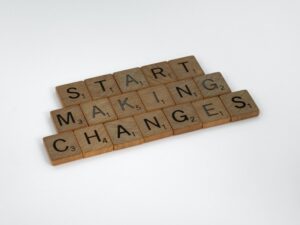
Reboot and revamp yourself by taking small steps toward big changes!
There you have it, my friend! We’ve reached the end of our guide to reinventing yourself and embracing big changes in your life. It’s been quite the journey, hasn’t it? Starting over can be a scary but exciting time. It’s an opportunity to make long-term changes in your life and create something new. So if you’re feeling stuck, don’t be afraid to start over. With the right mindset, you can turn your life around and create something better than you ever thought possible.
You have the power to reinvent yourself, embrace big changes, and lead the life you’ve always dreamed of. So keep learning, keep growing, and most importantly, keep loving yourself every step of the way. Thank you for joining me on this adventure. It’s been an absolute pleasure being your guide and cheerleader. Now go out there and shine brightly like the star you are!
Are you struggling to stay focused? Do deadlines, complex tasks, and every day chores get the best of you, leaving you feeling overwhelmed and procrastinating on your tasks instead of tackling them head-on? If this sounds like something that’s all too familiar, don’t worry – procrastination happens to everyone. I promise you, you’re NEVER alone.
It can be hard to find motivation when faced with a tedious or intimidating task, but it’s important to remember that procrastination isn’t the same as being lazy. In this blog post, we’ll look into what causes us to delay assignments and how understanding these underlying factors can help us manage our time more effectively. We’ll also discuss some practical tips to overcome laziness and procrastination once and for all so that you can become productive worker bees! Chronic procrastinators, keep reading to find out how to stop procrastinating right now!
How To Stop Procrastinating Right Now: A Guide
What is Procrastination and Why Does It Happen
Ah, procrastination, that mysterious and tempting force that seems to grip us at the most inopportune times, especially at work. You know how it goes – you have an important task to complete, a deadline looming. And yet, you find yourself scrolling social media, daydreaming, or diving into an unrelated task.
Procrastination is that baffling delay in action, where we consciously put off tasks we know we should be focusing on. As to why it happens, there are quite a few reasons ranging from feeling overwhelmed by the size of the task ahead to the fear of failure, or even simple boredom.
It’s important to recognize that we’re all human and falling into the procrastination trap is normal. But identifying the reasons behind it is the first step in overcoming this pesky habit and reclaiming our focus and productivity. So, let’s conquer the procrastination beast together and get back to ticking off those to-do lists!
How to Identify the Causes of Procrastination
Procrastination can be a sneaky enemy, silently undermining productivity and efficiency. To catch it in its tracks and unravel its causes, start by observing your daily routine and interactions. Pay attention to the tasks that you or your team members consistently put off. And delve into the reasons behind it. Are they too challenging or uninteresting? Or is the environment itself hindering focus or motivation?
Simultaneously, take a look at the existing workflows and communication channels, as confusion or lack of clarity can inadvertently fuel procrastination. Finally, reflect on your own emotional state, physical well-being, and external stressors. These factors can greatly impact our ability to stay on task. The sooner you understand the root causes of procrastination in your workplace, the quicker you can implement effective solutions and set your team back on the path to success.
Strategies for Overcoming Procrastination
It’s no secret that overcoming procrastination in the office can be quite a challenge. However, there are various strategies that can help you stay on track and boost your productivity.
First, try a little project management. Break your tasks into smaller, manageable tasks. Making it easier to tackle them one by one. Second, set deadlines for each task, providing yourself with a tangible goal to work towards. Moreover, don’t forget the importance of prioritizing tasks – focusing on the most pressing ones and working your way down the list.
If you’re still finding it hard to concentrate, consider creating your own “themed” workdays where specific tasks or projects are assigned to certain days of the week. Last, but certainly not least, remember that taking breaks is crucial for maintaining motivation and focus, so don’t deprive yourself of some well-deserved downtime. By following these strategies, you’ll be better equipped to kick procrastination to the curb and enjoy a more efficient work environment.
The Benefits of Overcoming Procrastination in Your Professional Life
When it comes to overcoming procrastination in your professional life, the benefits are bound to have a profound impact not just on your career but also on your personal satisfaction. Picture yourself for a moment—by conquering the habit of putting things off, you’ll suddenly become the go-to person in the office admired for their efficiency, reliability, and ability to meet deadlines.
Now, not only will you be breaking free from the frustrating cycle of leaving tasks to the last minute, but you’ll also open up new and exciting opportunities for career growth. Trust me, your future self will thank you as you celebrate timely accomplishments, reduced stress, and an overall increase in productivity. So why not start tackling your to-do list head-on? The rewards are well worth it!
Tips for Avoiding Distractions and Staying Focused at Work
Oh, the never-ending battle against distractions at work! One minute we’re deep in concentration, and the next, we find ourselves knee-deep in funny cat videos. What to do then? Well, first off, try setting small, achievable goals for yourself throughout the day.
By breaking tasks into bite-sized chunks, you’ll have a more precise idea of what needs to be done, which can help keep your focus on the point. Remember, there’s power in prioritizing your to-do list. If you’re someone who gets easily sidetracked, consider minimizing background noise by using noise-canceling headphones or creating a playlist of calming music to stay zen. And hey, don’t be shy about setting some boundaries!
Do your coworkers know how to use the “Do Not Disturb” sign on your door or computer? This clear communication can be a game-changer in the realm of productivity. Last but not least, give yourself the opportunity to recharge with short breaks – go for a walk, grab a healthy snack, or do a little stretch. Keeping your mind and body refreshed is crucial for staying focused all day long. This is particarly important for those that work remotely.
How Does Procrastination Affect Your Time Management?
Let’s talk about tackling procrastination and getting your time management game on point. It can be tough to stay focused sometimes, we get it. But luckily, there are plenty of ways to avoid procrastination and stay on top of your game! We all know the feeling of having a million things to do but finding ourselves drawn to distractions instead.
One helpful strategy is breaking down large tasks into small tasks, more manageable chunks. That way, you can make progress bit by bit without feeling overwhelmed. And speaking of progress, setting clear goals can be a huge motivator. Another great strategy is to use the time-tested Pomodoro Technique to set goals and hold yourself accountable. With due dates and milestones in place, you’ll have something concrete to work towards and can track your progress along the way.
And if you find yourself struggling to stay focused for longer amounts of time, don’t be afraid to take a long break to recharge. Just remember to hold yourself accountable and get back to work when you’re feeling refreshed. These are all great ways to boost your productivity in the long term and keep those procrastination demons at bay!
Final Thoughts on Achieving Productivity Despite the Temptation to Procrastinate
As the clock relentlessly ticks away, it is all too easy to let procrastination seduce us as we find our minds drifting toward distractions instead of diving into the task at hand. Achieving productivity could be likened to conquering a Herculean feat. Yet, the gratification we feel after having vanquished the allure of procrastination and emerged victorious, armed with our completed tasks, is incomparable. It’s vital to remember that our productivity cannot and should not be dictated by the temptation to idle away our time.
We must take the reins of our own motivation, carving out pragmatic pathways to reach our objectives, using the tools and techniques at our disposal. The mastery of productivity is an art form that requires practice, persistence, and self-awareness. As we progress down the road to success, let us seize the day, revel in our accomplishments, and find solace in knowing that we are no longer mere bystanders to our own destinies but active participants in shaping the lives we desire.
Overcome your procrastination with these tips!
Overall, procrastination is an issue that is all too common in the workplace. By understanding what it is and why it’s often a problem, employers and employees can begin to navigate ways to manage it. Uncovering potential underlying causes such as boredom and anxiety, setting up strategies for overcoming procrastination, looking for sources of motivation, avoiding distractions, and staying focused, are all important steps towards achieving productivity in the face of temptation to procrastinate. With commitment and dedication and the strategies illuminated in this blog post, you can get ahead of procrastination and avoid its temptation to bring your work life off track. They will help you feel motivated and break the cycle.
From social media posts to chic stationery, everywhere you go, you can find one quote doing the rounds – “Find yourself.”
But what exactly does it mean to find oneself? Frankly speaking, it is a lot of things. For starters, it is understanding who you really are. It’s also getting a sense of things. Not to forget, it is finding what makes you content. The list will go on but the real deal here is: How do you find yourself?
If you’re feeling lost in life, experiencing negative thoughts, and wondering how you can feel like your old self again, here’s your answer. Dive in with me and check out these tips to finding yourself again!
How to Find Yourself Again: Hot Tips
1. Reinstate the principles you upheld.
We all have our own values we believe in. But every time we do things that violate such values/ principles, we feel uncomfortable. In fact, it can make us feel really distant from who we are now and who we were when we set this values in place. Basically, this is when we stop being ourselves. So the solution here is to abandon the project if you are uncomfortable doing it. Don’t let your core principles slip, even if it causes you discomfort or you have to set boundaries.
2. Remember your past and learn from it.
We are always told not to be in the past. But just sometimes, it can do us more good than harm. It can remind you how you used to be before you changed for the worse. And that, you still can be that old version of you.
On top of this, it can teach you the art of survival – that if you survived in the past, you can do so this time as well. Sometimes, revisiting who you are, what went wrong, and what went right can be THE MOST POWERFUL part of finding yourself again and realigning with your values.
3. Cut yourself off from toxicity.
Sometimes the only thing that prevents us from finding ourselves is toxicity. Be it toxic ideologies or toxic people we are surrounded with. These toxic influences can drag you down and leave you feeling bleh. This is why it is important to reflect on people you surround yourself with, and their beliefs and ideas. Cutting yourself from toxicity can help you with your discovery. While it can feel uncomfortable at first, discomfort is an important part on your journey toward growth.
4. Spend more time with yourself.
Doing Nothing is a bad set of words in the eyes of the world. But that’s not the case when you are trying to find yourself. Sometimes, a nap on the couch, chilling it with a nice book, or practicing self care can be a game changer. Allow yourself to live in the moment.
All this is to say that when you sit idle, you are thinking about life and aspirations. And let’s just not undermine the power of thoughts; they can do wonders. Who knows if one of them is actually trying to find yourself? It’s important to find yourself on your own terms.
5. Look around at your tangible possessions.
Things we buy, things we surround ourselves with speak volumes. In this respect, they can totally help you determine who you are. For instance, if you bear an admiration of home-décor items and styling your home, perhaps something related to interior designing can be your thing. Use the things that surround you as a guide of sorts.
6. Make a list of things you like to do.
Our likes and dislikes are integral in the sense that they form a part of us. Therefore making a list of things you like and dislike can be your best shot to determine who you are. And its okay to try some things out before you settle on what you do and don’t like! After all, how are you supposed to figure it out without a few negative days or days of feeling lost? Don’t worry! It will all come together in time. It’s so important to learn how to find your true path.
7. Ponder about things that you don’t like about people.
Points that you do not like about others, might lead you to who you are absolutely not. For instance, if you do not like materialistic people, then you know that you are a simple person and capitalistic professions might not be your thing. If you don’t like how your “friends” pick other women apart, you may be someone who is more uplifting. Your vibe attracts your tribe, so make sure you aren’t falling into bad habits that you dislike about other people just because it’s comfortable. It’s okay to not like specific things or personality traits.
8. Think, what would you do if you were liberated of social and financial obligations?
Sometimes we do not do things we don’t like for the sake of earning a stable likelihood. Therefore, imagine if money is not to be a considerable factor, then what is it you would do? Singing, painting, whatever but one of your answers might be the end of your search.
9. Evaluate the subject of your social discourses.
The subjects and topics you talk about can bring you closer to the discovery. For example, if you find yourself engaging in conversations related to stocks and securities frequently, then you know finance may be your purpose in life. Being more aware of yourself and what you focus on is a great way to find yourself and who you really are.
10. Determine what gives you peace, even after a hectic schedule.
When you are doing something that defines you, you would be tired but you won’t ever run away. And just in case if you do escape, its absence will eat you up and you’ll come back to it eventually. This could be as simple as going to a weekly painting class or starting monthly pilates! Determine what you’re doing when you feel most at peace, even when you’ve had a big day. It will be THIS that lights a fire in your soul and makes you feel complete. The end result? Finding yourself!
11. Spend more time with the people you love.
Sometimes, the best way to find yourself again is to strip your life back to basics and spend more time with the people you love. This can be current friends and family, or someone from your childhood who makes you feel like YOU again. This can help to remind you of your purpose in life, heal your inner child, and really help you find who you truly are at your core. One chat with a friend or family member can open your eyes and make you feel like you’re returning home.
12. Stop worrying about society’s expectation.
Sometimes, the most debilitating thing on the path to finding yourself is society’s expectations. Forget about them! Forget what people are saying and ask yourself: “What do you want and like.” This way, you can dig deep, forget about negative influences, and live your best life. It’s okay to dream big without worrying about what “society” thinks. Step outside of your comfort zone and let the real you SHINE! Come on, you’re worth it.
13. Try something new.
Sure, trying something new can feel pretty daunting, but that doesn’t mean you shouldn’t do it! Sometimes, the best way to find yourself is to look forward instead of backwards. You may find that new things motivate you, inspire you, and ignite the fire within your soul. When you open yourself up to trying something new, you can meet new friends, find a love for life again, and find yourself to become the new YOU!
14. Be kind to yourself.
Last, but certainly not least, make sure you’re kind to yourself. While this does sound basic, it is so important. The journey to finding yourself isn’t easy, and may be really emotional at times. Just allow yourself some time, patience, and understanding, just like you would do for a friend. In fact, the best advice I can give is to treat yourself like a friend! Be kind, considerate, and passionate on this big journey.
This is your cue to find yourself.
Well, this is your cue people. Try out these tips to find yourself again and who you were always meant to be. If you’ve ever felt lost, finding yourself can feel like coming home after a long trip. Set your own short term and long term goal list, and smash it without fear of anything else.
Have you ever feel lost in your life? If so, how did you manage to find your way? Feel free to share your stories in the comments.I would love to hear your experience!
After the pandemic, I noticed that it had brought me so much anxiety. More than ever, I was seriously struggling. Anxiety is so mentally exhausting and affects almost every aspect of my life as a mom, wife, friend, and businesswoman.
The feeling of dread, unexplainable fear, and uneasiness can be disruptive to my day, leading to restlessness and many other unpleasant side effects. It can evoke feelings of agitation, distress, and worry. It induces physical symptoms like dizziness, sweating, and muscle tension.
The bottom line: It’s distressing, upsetting, and totally exhausting. And the stats below make it even more so.
According to American Psychological Association (APA), anxiety is “an emotion characterized by feelings of tension, worried thoughts and physical changes like increased blood pressure.” And, according to statistics, it is estimated that 264 million adults around the globe experience anxiety. (World Health Organization, 2017) and that an estimated 31% of all adults are said to experience an anxiety disorder at some point in their life. (Anxiety and Depression Association of America, 2020).
How To Practice Mindfulness For Anxiety
The start or increase of your risk of having anxiety may have begun as a result of lifestyle and possibly environmental factors. For example, health condition, sleep issues, relationship problems, work or school troubles. or general unhappiness. The good thing is that anxiety symptoms can be relieved, and one of the ways to do this is by practicing mindfulness.
Since anxiety can take a toll on you both mentally and physically, it is important to know how to deal with it. According to Healthline, it’s about turning down the volume in your mind by coming back to the body. It can help you focus on the present moment and soften your reactivity.
Mindfulness involves practicing guided imagery, breathing methods and other relaxing practices, helping you relax your mind and body. To help alleviate your anxiety and staying in the present, explore these mindfulness practices that might help you.
Setting an intention.
It would be best to have something to remind you of your purpose, and setting an intention works best for this. Yoga instructors encourage doing this before starting your day. When an important task gives you anxiety, remind yourself why you need to go through the process. If it’s a promotion interview, find it within yourself to focus on the main reason why you pursued it.
An intention can be simple, it doesn’t have to be hard. It can be as little as “I will make it through this day without getting mad or yelling at anyone.” Don’t overcomplicate it because then you won’t use it or want to do it.
Doing guided meditation.
Doing meditation practices is one of my favorite mindfulness exercises. It helps in processing thoughts and emotions with more acceptance. It improves sleep, lessen feeling burnout, depression, and helps with high blood pressure and gives you more clarity and focus. As anxiety can make us feel like we’re losing control, meditating strengthens our mind and body connection. And you can try guided mindfulness meditation programs online like Youtube and some apps.
The guided meditations from Peloton really help me to remember to breathe, and I use them often. They help my head slow down and not worry as much as I usually do. They help get me through the roughest parts of the day, even when it feel impossible.
Going for a walk.
Whether it’s a short jaunt or a stroll in the park, going for a walk can really help you ground yourself. There’s something about just being in the moment, without much of a care in the world, and being one with the outside world while you let your mind wander.
My favorite kind of walk, when it’s cooler here in Arizona, is to take Louie and Romeo for a 20 minute walk around the neighborhood. It’s a win win because we get outside and get some exercise, and they get tired by the time we get home so they rest!
Opening your attention to the present moment.
You might have heard it said many times and in many ways that opening your attention and focusing on the present moment is the key to enjoying life. Paying attention is not easy nowadays with all the distractions around us. We are used to anticipating what will happen in the future, the worst case scenario, and thinking ahead to be ready when something happens.
Aside from being stuck in thinking about the future and events in the past also boggles your focus. When you get cornered with the what-ifs and maybes, you ultimately feel worn out and exhausted. So stay in the moment. Use mindfulness-based stress reduction by finding the perfect balance of cultivating a sense of presence and reflecting on the past and future. Make an effort to notice anxious thoughts and consider why you may be feeling that way.
Focus on your breathing.
Having negative thoughts affects your focus. To help yourself, focus on your breathing. Close your eyes, take a deep breath, and settle on a comfortable sitting position. You can learn different techniques for this. Try deep and controlled breathing or shallow to be present. It works in relieving stress and frustrations.
I have had to work so hard on remembering and learning to breathe as I have a tendency to hold my breath when things get hard or overwhelming. I have found though, that when you breathe, it helps relax your body and ends up helping the tension and tough feelings go away. Breathing makes things easier and the more you can tune into doing it, the better off you will be.
Podcasts For Mindfulness
Mindfulness for Beginners
Mindfulness for Beginners is a great way to enter the world of mindfulness without becoming overwhelmed. The host understands that getting started can be daunting, and guides you through with expert help. It is a very spirituality motivated podcast, and will build a solid mindfulness foundation.
Daily Meditation Podcast
Set your life up with 30 minutes each morning. The Daily Meditation Podcast is full of amazing tips, tricks, and motivation to help you thrive. This podcast helps to guide you through self-reflection on topics like empathy, courage, and anxiety. You can listen any time, but it is the BEST way to start your morning with simple mindfulness exercises.
Tara Bach
Learning how to listen to yourself and what you’re feeling can make a world of difference your life. The host of this podcast, Tara Bach, talks a lot about mindfulness-based cognitive therapy, human behaviour and emotion, and so much more. If mindfulness with a touch if science is your thing, this is the podcast for you.
Untangle
Untangle is a weekly meditation podcast to help you support your mental health. It is all about resetting your nervous system and using mindfulness exercises to lead a better life. On this podcast, listen to neurologists, psychologists, and more.
Our Mindful Nature (formerly The Mindful Minute)
Our Mindful Nature offers helpful and accessible mindfulness techniques in the form of fascinating episodes. It doesn’t take long to take time for your self, settle on in, and be mindful. I love that this podcast is all about taking time, even 5 minutes, to connect and ground yourself. So, if you’re a busy person, this is the podcast for you!
Ease your anxiety with these tips.
There are a number of mindfulness techniques that can help people anxious feelings and generalized anxiety disorder. Mindful breathing, body scan, and mindful of thoughts and feelings are only a few of the most popular techniques that help with stress and anxiety. While these techniques do take some practice to get used to, they can be very helpful in managing symptoms of anxiety on a daily basis. For people who suffer from generalized anxiety disorder, mindfulness can be an essential tool for helping to manage the condition. In conclusion, mindfulness is a valuable tool that can help reduce stress and anxiety levels in people of all ages in daily life.


 professional or personal life or the quality of your lifestyle that propels you to cultivate new habits. Habits are formed by doing it repeatedly, consciously, and subconsciously.
  and it should be for yourself and not for someone else. If you’re planning to change your diet, be specific about what you want to attain.
  unfollow online shops in your social media accounts, and unsubscribe to newsletters from your usual online shops. Curate your exposure to temptations and be consistent with them.
 makes you see things differently. It also helps you control your stress levels and indulge in healthy habits. A positive mental attitude, even if you fake it til you make it at first, will eventually become the real deal and help you live a much better life with good habits.
 The new year is a time when many of us feel inspired to start over, although we can start over any time we want. We may have failed to meet our goals in the past, or we may simply be ready for a fresh start.
 A great way to learn more about yourself and the world around you is to
  Clarifying your values is an essential step in creating a life that is fulfilling and meaningful. Knowing what you stand for will help you to make choices that are in alignment with your true self.


 can implement effective solutions and set your team back on the path to success.
 to-do list head-on? The rewards are well worth it!
 distractions instead of diving into the task at hand. Achieving productivity could be likened to conquering a Herculean feat. Yet, the gratification we feel after having vanquished the allure of procrastination and emerged victorious, armed with our completed tasks, is incomparable. It’s vital to remember that our productivity cannot and should not be dictated by the temptation to idle away our time.
 principles, we feel uncomfortable. In fact, it can make us feel really distant from who we are now and who we were when we set this values in place. Basically, this is when we stop being ourselves.
  to find yourself. Sometimes, a nap on the couch, chilling it with a nice book, or practicing
  imagine if money is not to be a considerable factor, then what is it you would do?
 environmental factors. For example, health condition, sleep issues, relationship problems, work or school troubles. or general unhappiness. The good thing is that anxiety symptoms can be relieved, and one of the ways to do this is by
  this. Yoga instructors encourage doing this before starting your day. When an important task gives you anxiety, remind yourself why you need to go through the process. If it’s a promotion interview, find it within yourself to focus on the main reason why you pursued it.
  something about just being in the moment, without much of a care in the world, and being one with the outside world while you let your mind wander.
  take a deep breath, and settle on a comfortable sitting position. You can learn different techniques for this. Try deep and controlled breathing or shallow to be present. It works in relieving stress and frustrations.
Recent Comments