So you’re getting a new puppy. Whether it was quarantine that made you want a new companion or your kids finally reaching an age where they can have some shared responsibility, you have some important decisions to make. Undoubtedly, family members will be anxious to welcome the new addition, but don’t let them rush you. It’s imperative that you weigh your options carefully before bringing Fido home.
The one thing you don’t want to do is make your decision based on how cute a puppy is, rather than what he’s going to be like when he’s four years old.
You want to fall in love today and make sure you are still in love when the cuteness of the puppy wears off.
What Kind of Puppies to Get
New Puppies versus Dogs
Puppies are adorable, but they aren’t all cuddles and kisses. Like children, puppies need to be taught right from wrong; and like children, puppies will lose their baby teeth in order to grow adult ones. The difference is that instead of chewing on a baby toy while teething, your puppy will chew on the leg of your brand new Arhaus coffee table. Consider bringing a fully trained dog into the family. If you have young children constantly pulling you in three different directions, chances are, you won’t have time to take a puppy outside to pee on the grass every hour.
Big Dog Little Dog
Most dogs are little when they’re puppies. But some of those puppies grow to be six pounds, and others grow to be over 75 pounds. A Maltese may not be the best choice for your family if your teenage boys are constantly roughhousing on the floor or playing tackle football in the backyard with their buddies. Likewise, a Saint Bernard isn’t a sensible choice when the home is a walk-up brownstone in Manhattan.On the other hand, sometimes the fun loving gentle giants like a Great Dane are perfect for city life as well as country living. It’s important to sort through the popular dog breeds and the not so popular and find the right dog for you and your family.
Dogs That Are Good with Kids
The Centers for Disease Control states that every year, 4.5 million Americans are bitten by dogs, and about 20 percent of the victims require medical care.
Don’t put yourself or your children in danger by getting a dog that has a bad reputation. Sure, there are plenty of nice Pitt Bulls, but why take the risk? Ask a veterinarian or seek online resources to help you find a dog that will be perfect for your family. Do your homework; it will pay off.
On the other side of the coin, there are several smaller dog breeds that are known to bite because they scare or spook around children. If you want a family dog that loves to play, it might be best to stay away from the smaller dogs, especially if you know your children have energy levels that will outlast the puppy stage of the dog.
Shedding versus Non-Shedding Dogs
Golden Retrievers are beautiful dogs, and they make wonderful pets. But if you get one, expect to find dog hair….everywhere! Many pet owners consider this a minor inconvenience if, in fact, they consider it at all, but some people are more uptight when it comes to sanitation and cleanliness. If having dog hair all over your black sweater makes you cringe, a non-shedding breed might be the way to go. Although most non-shedders do a pretty good job of keeping their fur to themselves, keep in mind higher maintenance is required since brushing and grooming are essential. Dogs with double coats like Bernese Mountain Dogs, French Bulldogs, and Corgis are a few of the dogs that you can expect to see hair on the floor. If you are thinking long haired versus short haired dogs but don’t want the maintenance, consider the Irish Setter, who needs brushed daily to ensure their long hair doesn’t tangle. Other times, short hair isn’t always the best. Our French Bulldog, Louie, who’s shown in these photos, sheds his short hair every time he itches or shakes.
Some Dogs are More Active than Others
Dogs depend on their owners to give them what they need to be healthy, and that includes exercise. If you have a large backyard, you may be able to get away with tossing the tennis ball for a few minutes every day to provide your dog with the activity he needs. But if you live in a house with a tiny yard or an apartment, you will need to walk your dog on a daily basis. All dogs need exercise, but obviously, some need more than others. If your idea of working out is getting off the couch Sunday afternoons to grab a beer during half time, perhaps you should get a Pug instead of an Irish Setter. If you take the dog to obedience training, they often teach a technique or series called a “puppy pushup” which is a series of sit and down several times. This wears them out, and allows city dwellers to have a higher energy pet if they are trained in obedience.
Dog Breeder or Pet Store
Once you’ve made the weighty decision to purchase a new puppy, you need to make an important decision. It’s so tempting to purchase a pet store puppy that fluffy little ball of fun looks at you with his beseeching eyes, and it’s obvious how much he loves to roll around and play rough with the other puppies in the window. Unfortunately, a large number of pet stores obtain puppies from puppy mills where dogs seldom receive the much-needed interaction with humans that they need to form proper dog-human relationships.
Many puppies from puppy mills are taken away from their mother before they should be, giving rise to fearful behavior and anxiety. Seek out a reputable dog breeder in your area and contact them regarding the next available litter. It may cost you more money, and you may have to wait a little longer for your puppy, but it will be worth it. Hopefully, you will have your dog for many years to come, so what’s another 5 or 6 weeks?
Speaking from experience of the puppy store, we got our new pup, Louie, from a puppy store and it was a great experience. Lucky for us, we got Louie a few days after he was transported to the store, and he now gets plenty of human interaction. While I know we could have adopted or searched out a breeder in our area, for us, it was so much more simple to go in and see what we wanted, look online for the pros and cons, and search photos of what the dogs look like as adults and decide. It was a quick decision we don’t regret at all. Louie fits well with his big brother, Champ, and the girls love him too.
Local Dog Shelter Puppy
Consider getting your puppy or dog from the Humane Society or local animal rescue shelter. There are many shelters in cities that people aren’t even aware of. Many “no-kill” shelters foster dogs, puppies, and animals out to caring for foster families until they can be adopted. Be aware that some of these puppies are rescued from puppy mills so they may have some of the same anxiety that puppy mills have, but in many cases, the puppies are rescued young enough to able to form solid bonds with their new families. Oftentimes, the mixed breed puppies are also the best combination of both breeds of their parents, making them the perfect match for what you are looking for, yet can’t find in a pet store. A family dog can be high energy when it wants and then lazy and love kids and naptime other times. Patience is the key when welcoming a new family member.
Consider all the factors when selecting the type of dog breed for your new family. Then once you’ve made the decision and jumped in with both feet, enjoy your loving new addition. And remember not every day will be great, much like with kids. But those days in the grand scheme of things will be far and few between. Make sure whatever decision you make, is one that’s for your family and your best interest. There will always be puppies, make sure to really take the time and decide what is best for you.
If you’ve been following along on my Instagram, you will know we’ve taken on a new family member with four legs, named Louie. He’s a French Bulldog, and right now, he’s right over 4 months old. I was worried about the time commitment and potty training process. But I’ve been able to make it easier than I thought!
Here’s a little picture for you to see what I mean when I say I have a hard time getting mad at
him. He’s such a cute little guy, and I knew I was going to be easy on him when it came to discipline because of his breed and because he is such a cutie!
How To House Train A Puppy
House training your puppy should not be a hard or long process. All you need is treats, timing, and a crate to get a housebroken puppy in a few days.
When people have problems housebreaking their puppy, they often blame it on the dog’s lack of intelligence or stubbornness. The truth is that the problem comes from the training; in other words, the owner.
Errors people make when housebreaking a puppy
The most common error I see people do when house training their puppies is not going outside with him. During the training, you absolutely need to go outside with your puppy. If you don’t, it will lead to a big problem: bad timing.
Let’s say you send the dog outside, and after he urinates, call him back in to give him a treat. What you just did is positive reinforcement for coming back inside, which is good. But the dog did absolutely not make the link between urinating outside and the treat because the timing was off. The same thing happens if you go outside with him but call him back to you before giving him the treat. You reinforce coming back when called, which again is good, but doesn’t help with ‘’potty’’ training!
Another common error is to talk too much! People take their pup outside and bombard them with encouragements that don’t mean anything to the dog, which is just confusing and distracting him from his ‘’task’’.
How to quickly house train puppies
First of all, a puppy needs to go outside quite a few times during a day:
First thing in the morning, after a meal, after playtime, after a nap, before going to bed, and after crate time.
The age of the puppy also dictates how often he needs to go. A puppy can hold his urine for a number of hours equivalent to his age in months plus 1. For example, a three-month-old puppy can hold it for 4 hours (although when they are asleep, they can go longer).
Unfortunately, puppies do not come into this world, knowing that they can or have to hold their urine or feces. Since your new buddy doesn’t know he is not supposed to go into the house, he will do it anytime he feels the need. This means you have to watch him! When he starts sniffing the ground like he’s following a trail, take him outside.
For the moments when you can’t watch him (including during the night), I have one word: crate.
The crate makes housebreaking any puppy a breeze. Dogs don’t like to eliminate where they sleep, so by being crated, he will realize he can hold (although not for very long at first) his urine and feces.
For this to work through, the crate needs not to be too large because the puppy will then eliminate in one part of the crate and sleep in another part. It is also very important that the crate is introduced to the puppy in a positive manner and does not represent a punishment.
The more you avoid him having accidents in the house, the easier the training will be, because every time a dog urinates or defecates inside, he becomes more inclined to do it again.
Avoid giving him occasions to have accidents in the house by watching and crating him.
If he does have an accident inside and you catch him doing it, pick him up without a word and take him outside. Reward him if he finishes outside. If you don’t catch him in the act, all you can do is clean. Do not, I repeat, do not ever punish him or put his nose in his pee or poop. This will just confuse him even more.
Now that you know how to avoid accidents in the house and when to take your puppy outside, the rest is going to be really easy.
Once outside, you need to have a treat ready in your hand and follow your pup around (without talking to him), so you are always within arms reach. When he starts urinating, say the command you want to use for this, like ‘’go pee’’, on the same tone you would use to give this command. When he’s finished, at the very second urine or feces stop coming out, give him the treat and tell him he’s a good boy. The treat needs to be eaten before he even takes one step.
By doing this, you are doing two things:
1. reinforce urinating or defecating outside
2. creating an association between the command and the act
3. Do this for a few days, and you will have a house trained dog that will eliminate on command!
Housebreaking quick review
Take your puppy outside first thing the morning, after each meal, after playtime, after crate time, after a nap, and before bedtime.
A puppy can hold his urine for a number of hours equivalent to his age in months plus 1, but only once he understands he has to hold it.
Watch your puppy for signs of imminent elimination.
When you can’t watch him (including during the night), put him in his crate.
Say the command while he does it.
Get the treat in his mouth at the very moment he is done and tell him he’s a good boy.
As all dog owners know, house training a puppy is an essential part of pet ownership. Fortunately, there are a number of different methods that can be used to teach your puppy where to potty. One common method is crate training, which involves confining your puppy to a small space when you cannot directly supervision. This helps to prevent accidents by giving your puppy limited access to the house. Another option is to use baby gates or puppy pads to create designated potty areas. Regardless of which method you choose, it is important to be consistent and patient as you teach your puppy where to go. With a little time and effort, even the most stubborn puppy will learn where they are supposed to go potty. And one last tip — if you’ve had a puppy in the past, that’s great, however no two puppies are the same. What worked the first time may not work this time. Make sure to have patience and be consistent and have fun. Your pup will be grown before you know it!
This time last year, the term “work from home parent” probably brought to mind an image of a frazzled
mom who ran an MLM business from her couch. Less often, it made you think of a dad who did web
design from the garage or a mom who ran an Etsy business out of a spare bedroom.
In reality, there were probably hundreds of thousands of businesses being run by parents who chose to stay at home, running the gamut from self-trained gourmet foodies who ran catering businesses from their kitchens to
college-educated women running million-dollar marketing companies from their basement. They ran their businesses using technology from Zoom, Slack, GoPro, and more. These businesses ran quietly behind the scenes.
Why Working at Home May Become the New Norm Post-COVID
In mid-March 2020, corporations worldwide began shutting down and sending employees home to work due to the outbreak of COVID-19. Within weeks, the technology that had powered small businesses was powering big business as remote employees began using it to connect real-time. Crowded interstates became barren wastelands, and laptops became scarce physical goods as companies transitioned their employees to remote workers. There were a few bumps for most companies. But overall, people made the change pretty well.
By May, companies were talking about making the changes permanent.
According to Progressive Policy, as many as two-thirds of American workers moved to work-at-home
positions thanks to COVID. While the traditional employer stance against work at home or even flex-
time employment has been worry about whether or not their employees would actually, well, work,
while they were working at home, corporations saw an improvement in employee productivity as
commute times disappeared. In-office distractions were reduced, even though most workers with
families were also trying to juggle managing distance learning for older children. Many were trying to
work while taking care of infants and toddlers because daycare was completely unavailable. And they
made it work. Parents worked odd hours, traded off computer time, and distracted preschoolers with
tablets and Netflix, but the work got done.
Twitter has made work from home the default for their employees. Progressive Insurance is keeping
most of its employees home into 2021. It wouldn’t be surprising to see moves like these become trends
in specific sectors: tech, financial services, marketing, etc. Of course, not everyone will be able to work
from home. Grocery stores will still need to be stocked, and roads will still need to be built, and
someone will still need to make sure the coffee gets made at Dunkin. But Stanford Research expects
that even after COVID finally comes to pass, around 40% of American workers will be based at home, up
from 5% before the pandemic started.
What does that mean for those of us that were at home before Corona?
It could mean better and less expensive tech. As more companies rely on technology to keep remote
workers connected, we should expect to see that technology improves and decreases in cost. Of course,
as the demand increases, there are going to be some hiccups. Much like Zoom's problems in the spring
of 2020 with hacked meetings and classes, we may see some issues creep up in software that is essential
to our work. Flexibility will be the order of the day!
Increasing the number of remote workers serves corporations in several ways. First of all, they will be
able to decrease the amount of space they take up, thus reducing their carbon footprint and the cost of doing business. Why rent one hundred office spaces spread over four floors in prime downtown office space if your workforce is just as functional with a single floor of shared space with plenty of charging ports for people to come in and use as needed and a conference room for private meetings that can’t be handled online?
Next, remote working makes most people happier.
They aren’t spending time commuting. They aren’t stuck in a room they don’t want to be in. And they often aren’t bound to a standard nine-to-five schedule. And even when they are, they get their time back right at the end of their shift, instead of having to wait for that often grueling drive home.
Finally, remote working allows for people who aren’t traditional learners or workers to function in a way
that benefits them. Some people are naturally night owls. If your company has gone remote and doesn’t
need you to be available at a specific time, then starting work at seven in the evening is perfect for you.
If you were recently in an accident and needed to attend physical therapy three days a week, you’re not
putting anyone out if you don’t start working until after lunch. If your spouse works days in a role where
she can’t be flexible, and daycare is still scarce because of COVID, then you can watch your child during
the day, and your spouse can take over in the evenings while you work.
Having more remote workers will be beneficial to us as a society. We will be better able to negotiate job
terms, end up with jobs where we are happier, and work more beneficial schedules. Corporations will
find having more remote workers valuable as well, with decreased real estate costs and more satisfied
employees, which will result in lowered retention costs.
Before you decide whether you are going to homeschool your kids or enroll them in a remote learning program, you need to factor in several things. As a mother who has been doing the remote learning for about a month now, and I can tell you, it’s not as easy as it sounds. I thought I was going to be able to do the things I heard my Mother-In-Law and Grandma-In-Law say they did when homeschooling back in the day, but I haven’t been able to do any of those things. Both homeschooling and remote learning have challenges and strengths. You need to understand them well to be able to make an informed decision.
Homeschooling vs Remote Learning
Homeschooling Pros
One of the main pros of homeschooling is that it offers you absolute flexibility. You have the power to choose what your kids will learn, when to take breaks, curriculums to use, learning patterns and so much more.
You can track your child’s learning progress because you get instant feedback from them. And you can tell where they are struggling. And find ways to fix this issue with ease since you are physically together the whole time.
You have access to resources and supplies that you can use to make your homeschool successful. Many of these resources are free or can be acquired at a low price.
Homeschooling also creates a good bond between you and the kid. You will have challenging moments occasionally. But the flexibility offered by homeschooling implies that you can easily take breaks or work with your schedule. It’s easy to have fun when homeschooling and engaging your kids in fun craft projects.
Homeschooling Cons
Homeschooling can be engaging and if you do not have a good support system, you are likely to experience homeschooling burnout.
You are not an expert in all the subjects your child is supposed to learn. This means that your level of teaching might be limited. Unlike in a classroom environment where qualified teachers tackle different subjects, in homeschooling, you will be teaching all subjects. This might feel intimidating to you and make you feel inadequate sometimes when you don’t understand a certain concept.
If you have other obligations, homeschooling can be tough. There is a delicate balance between teaching, working, and taking care of other chores that need your attention at home.
Remote learning pros
The main advantage of remote learning is that your kids will be connected to their teachers and probably other students as well. This means that they have the chance to interact online with everyone, talk to each other, and share the challenges they are facing with their school work. They also get help and inspiration. Talking to other people is good for their social life as well.
Remote learning allows schools and teachers to continue teaching kids even in times of crisis (such as this lockdown). This enables the kids to stay focused and ready to go back to the classroom environment when everything goes back to normalcy.
Remote learning is affordable. Most schools charge less for remote learning compared to traditional classroom learning. Your kids will also have access to a lot of resources to make their learning efficient.
Remote learning cons
Remote learning can never replace traditional face-to-face classroom learning and interaction. In classroom learning, the feedback is immediate and the teacher can tell if the kids understand what they are being taught immediately.
Unlike in a classroom environment where the teacher can handle each kid individually depending on their strengths, many lessons on remote learning platforms are not differentiated. If your kid is struggling with certain aspects of their learning, it can be difficult for them to cope with remote learning because they do not get individual attention.
It can be hard for parents to monitor remote learning especially if they have other chores to attend to. Kids might take advantage of this to do other things online. It may also be hard to prevent online bullying. Kids are encouraged to find screen-free ways to have fun and remote learning does not facilitate that.
Homeschooling vs Remote Learning vs In-Person Schooling
This week, our district has given us the option to send our kids back to school full time in person for 5 days or continue the remote learning until the end of the semester in December. Part of me wants to continue the Remote Learning, while another part of me wants them to go back to school to get my freedom back. I will keep you posted as to what we end up deciding to do. But for now, I’m still remote teaching for at least 2 weeks as the in-person schooling is a phased process.
When traveling, you can’t take your house with you, so how do you deal with children’s games? How do you keep your kids from asking “Are we there yet?” a thousand times or needing to stop for a break every 5 minutes? How do you keep them entertained in a world where internet connection rules? The times we are living in has more and more people thinking of taking longer trips, not a quick one that entertains them for longer. As a result of this new normal, we are getting new requests for travel games to keep kids busy on long train or car or plane trips. I searched and searched to pick some of the best games available. This is a quick summary for all ages and some games are easier to handle when things do not move too much or on a small tablet.
This superior quality chess set offers you smooth hand-feel while frivolous. Smooth processing for each chess piece to lower the noise while traveling. Offers silent environment for your analytical thinking.The pieces are stress-free to differentiate. The Chess set has an attractive wrapping with rules of the chess game available inside the box. Every distinct piece of the chessboard has a magnetic pull to the playing field of the 64-square chessboard, and light magnetic attraction would create it steady to play while not solid to transfer the pieces at the time of playing in stormy weather, out-of-doors or traveling. Small enough for travel in a backpack or bag, but large enough surface area for easy play.
Appreciate the typical game of bingo, animal style, anywhere you go. Easy to play with simple to follow the rules. No requirement for decks of cards only utilizes the magnetic pieces and a built-in magnetic spinner. This game is recommended for ages 3 and above. This game is played between two or more players. It is an excellent hands-on game for children to stay busy for long hours without utilizing technology or their phones. A classic game that everyone is sure to know and want to play instead of driving or being left out for long!
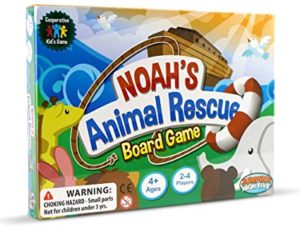
In this board game for kids, it’s a contest to acquire all of the animals on Noah’s boat beforehand the
excessive flood. Collect every animal together to conquest. Appropriate for two to four players, and
appropriate for kids age 4 and up. The box comprises one game panel, five animal tokens, thirty-six
terrain cards, one rain token, and thirteen rain cards. This makes a great gift for Christmas or other holidays including a birthday present.
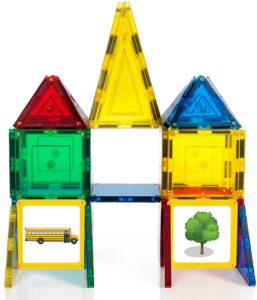
This forty piece game set consists of thirty-two magnetic tiles and eight style mags. The original
technology creates Stile Mags, simple accumulation of magnetic buildings as well as mosaics. Talk about a game that is friendly for all ages and imaginations! This one is sure to keep them (and maybe you) busy for hours on end creating magnetic magic!
Appreciate the all-time typical game of Backgammon anywhere you go. No requirement for decks of
cards, sports, or additional action games. This game has you enclosed with long hours of
entertainment. This game is played between two players. It comes with all that you require to get on
the go, such as magnetic pieces, two dice, and the game board published ingeniously within the box.
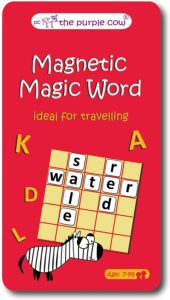
Appreciate the typical game of Words anywhere you go—no requirement for technology, phones, or
applications. Pick your head to come up with a word prepared from letters on your board. This game
can be played between 4 players.
Board games and the like are at an all time high, especially those that are friendly on the go. Families are spending more time together and games that can be easily taken on a ride and don’t get upset when moving will continue to be at the forefront of shopping purchases this year and next. What is your favorite game to take with you which is missing from the list?
I know that when we are ready to travel outside our comfort zone again, I want to go somewhere affordable, but not break the bank getting there. Our girls are getting older and about the age where we can take them on longer trips they will remember. I want them to be able to explore like I wasn’t able to at their age. I long to give them culture and experiences at a younger age so they don’t go travel crazy like me when they are older. We are impatiently awaiting these rankings of the cheap, most trendy destinations or, conversely, the less known.
Here are the top 10 affordable places perfect for big adventures and visit in 2020.
10 Affordable Places to Visit in 2020
1) Ecuador
If South America is in your sights, you should consider Ecuador. A country of contrasts with its legendary volcanoes, its colorful colonial towns, and its seaside life punctuated by the Pacific Ocean, there is plenty to have fun! Very small between Peru and Colombia, Ecuador can be explored easily, quickly, and inexpensively. According to Lonely Planet, almost everything is within half a day of transportation. As much as Ecuador is a cheap destination, so are its famous Galapagos Islands.
2) Slovenia
The ultimate base camp for lovers of the outdoors, Slovenia, has carved out a place of choice in this list. Affordable, the “green heart of Europe”; reveals itself in several facets: a seaside town with Venetian beauties, Alpine passes in the sky, a forest of stalagmites, castles like fairy tales.
3) Argentina
Historically, Argentina is recognized as an economic destination. And she does not skimp on efforts to remain so! For example, foreign visitors who pay for their accommodation by international bank card are entitled to a refund of taxes or, even certain nationalities benefit from visas at reduced prices, underlines Lonely Planet. Hikers will find their challenge at the Perito Moreno Glacier and certainly at Aconcagua, while Buenos Aires is a real eye-catcher for art and culture lovers.
4) Southern Nile Valley, Egypt
When we talk about the south of the Nile Valley, we discuss the region between Aswan and Luxor. An essential stopover during a trip to Egypt, Luxor, is often the starting point for a cruise on the Nile, which is, according to Lonely Planet, an excellent way to travel economically. Often, food and other transportation are included, and the entrance fee to larger monuments is not very expensive. The longest river in the world is yours, desert adventures, temples, and ancient treasures.
5) The Maldives
Hard to believe, but the Maldives is becoming more and more affordable. Independent tourists are increasing, and that at the same time, a network of cheap accommodation is developing.
This is a BIG goal on my travel list because the beautiful pictures and stories I’ve heard of these islands. It’s quite a long airplane ride, but I believe Steve and I will visit here soon.
6) Albania
Albania is a very cheap destination that lurks right in front of our eyes! Even today, few tourists visit the last frontier of Europe. Bordered to the north by Montenegro and to the south by Greece, Albania offers hikes in glorious landscapes, tasty gastronomy, small historic villages, and unique archaeological sites.
7) Great Smoky Mountains National Park, United States
With more than 10 million visitors annually, Great Smoky Mountain National Park, straddling Tennessee and North Carolina, is far from a well-kept secret. Quite the opposite, it is the most visited national park in the United States. Entrance to the park is free, so it is an excellent option for an economical road trip or hiking trip. Especially since the Great Smoky Mountains are crossed by one of the longest and most famous North American trails: the Appalachian Trail.
8) Łódź, Poland
Łódź, Poland’s third-largest city, is a must-see destination. This former industrial city, once in decline, has transformed in recent years to unveil innovative architectural projects, street arts, and districts entirely dedicated to culture and entertainment.
9) Houston, United States
Houston offers one of the best value for money in Texas. Among other things, the Houston Museum District’s urban escapades allow you to visit the metropolis on foot through 19 museums, ten of which are free, and the EaDo district presents us with an outdoor street art gallery to visit in self-guided mode.
10) Naxos in Greece
An island known by the Greeks takes a scooter tour to enjoy the landscape and have a good time. It is one of the most beautiful of the Greek Islands and a short ferry ride away from the super famous Paros and Mykonos Islands, but stays under the radar for popularity. If you visit here, chances are you will get all the beautiful views you long for when on a Greek vacation.

 taught right from wrong; and like children, puppies will lose their baby teeth in order to grow adult ones. The difference is that instead of chewing on a baby toy while teething, your puppy will chew on the leg of your brand new Arhaus coffee table. Consider bringing a fully trained dog into the family. If you have young children constantly pulling you in three different directions, chances are, you won’t have time to take a puppy outside to pee on the grass every hour.
 The Centers for Disease Control states that every year, 4.5 million Americans are bitten by dogs, and about 20 percent of the victims require medical care.
 exercise. If you have a large backyard, you may be able to get away with tossing the tennis ball for a few minutes every day to provide your dog with the activity he needs. But if you live in a house with a tiny yard or an apartment, you will need to walk your dog on a daily basis. All dogs need exercise, but obviously, some need more than others. If your idea of working out is getting off the couch Sunday afternoons to grab a beer during half time, perhaps you should get a Pug instead of an Irish Setter. If you take the dog to obedience training, they often teach a technique or series called a “puppy pushup” which is a series of sit and down several times. This wears them out, and allows city dwellers to have a higher energy pet if they are trained in obedience.
 Speaking from experience of the puppy store, we got our new pup, Louie, from a puppy store and it was a great experience. Lucky for us, we got Louie a few days after he was transported to the store, and he now gets plenty of human interaction. While I know we could have adopted or searched out a breeder in our area, for us, it was so much more simple to go in and see what we wanted, look online for the pros and cons, and search photos of what the dogs look like as adults and decide. It was a quick decision we don’t regret at all. Louie fits well with his big brother, Champ, and the girls love him too.
 him. He’s such a cute little guy, and I knew I was going to be easy on him when it came to discipline because of his breed and because he is such a cutie!

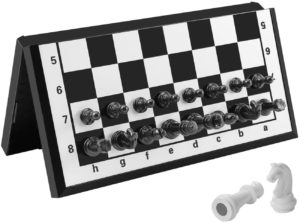 traveling. Offers silent environment for your analytical thinking.The pieces are stress-free to differentiate. The Chess set has an attractive wrapping with rules of the chess game available inside the box. Every distinct piece of the chessboard has a magnetic pull to the playing field of the 64-square chessboard, and light magnetic attraction would create it steady to play while not solid to transfer the pieces at the time of playing in stormy weather, out-of-doors or traveling. Small enough for travel in a backpack or bag, but large enough surface area for easy play.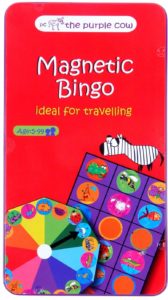

 technology, phones, or
Recent Comments