It can get hot in Arizona, especially during the summer season. However, if the fall season, the temperatures start to cool down and you can finally go outside an enjoy some outdoor activities. We look forward to fall all year long, especially when the scorching temps continue for over 100 days straight!
With temperatures typically being in the 70’s during the fall in Arizona, that brings a variety of different fun things to do in Arizona in the fall. When you are wanting to enjoy a bit of the great outdoors while the weather is nice, here are a few things to experience in the fall.
Things to Do in Arizona in The Fall
1. Enjoy the Fall Flavors
Fall brings in some of our favorite flavors when it comes to drinks and food. Many of the area restaurants and shops bring in the seasonal foods from local supplies and will include them into their dishes.
Take a challenge and try at least one new dish that incorporates some of the best fall fruits or vegetables. This may be a whole new experience for you with the flavors and textures. You might just find a new favorite fall flavor or restaurant that you love.
2. Attend a Fall Festival
No matter where you are, there are always some fun fall festivals to attend when the season comes around. Many areas of the state, big and small, put on fun family friendly festivals that everyone can attend and have a little fun at.
3. Be a Tourist Again
Rediscover Arizona just like a tourist would. You can plan a trip around the state to visit the national parks, scenic byways, and major tourist attractions. There are always a variety of different museums, art collections, and other attractions that are sure to pique your interest.
If you want to stay a bit closer to a certain area, instead of traveling around the state, plan a trip around your favorite or closest larger city to enjoy everything it has to offer.
4. Outdoor Experiences and Sightseeing
Much like being a tourist again and visiting some of your favorite museums and other indoor activities, take an adventure outside to discover the beauty around you.
Arizona is full of picturesque landscapes, like those beautiful views you see on the postcards. Full of forests that have thousands of beautiful tall trees, it is the perfect time to take a hike or visit one of the national forests in Arizona. You can also take a camping trip to enjoy the outdoors for a close-up sightseeing experience that you are sure to remember.
Another way to experience some of the outdoor beauties is to take a hot air balloon ride that are done in several locations throughout Arizona. Not only will the ride be an exciting activity, you will also get to see the beauty of Arizona and the mountains from way up high.
These are just a few of the many things you can do in Arizona in the fall. The list is endless and there is nothing better than experiencing the nice weather and beauty Arizona has to offer. Whether you are traveling with a small group or friends and family, Arizona is a great place to see during the fall.
Before you decide whether you are going to homeschool your kids or enroll them in a remote learning program, you need to factor in several things. As a mother who has been doing the remote learning for about a month now, and I can tell you, it’s not as easy as it sounds. I thought I was going to be able to do the things I heard my Mother-In-Law and Grandma-In-Law say they did when homeschooling back in the day, but I haven’t been able to do any of those things. Both homeschooling and remote learning have challenges and strengths. You need to understand them well to be able to make an informed decision.
Homeschooling vs Remote Learning
Homeschooling Pros
One of the main pros of homeschooling is that it offers you absolute flexibility. You have the power to choose what your kids will learn, when to take breaks, curriculums to use, learning patterns and so much more.
You can track your child’s learning progress because you get instant feedback from them. And you can tell where they are struggling. And find ways to fix this issue with ease since you are physically together the whole time.
You have access to resources and supplies that you can use to make your homeschool successful. Many of these resources are free or can be acquired at a low price.
Homeschooling also creates a good bond between you and the kid. You will have challenging moments occasionally. But the flexibility offered by homeschooling implies that you can easily take breaks or work with your schedule. It’s easy to have fun when homeschooling and engaging your kids in fun craft projects.
Homeschooling Cons
Homeschooling can be engaging and if you do not have a good support system, you are likely to experience homeschooling burnout.
You are not an expert in all the subjects your child is supposed to learn. This means that your level of teaching might be limited. Unlike in a classroom environment where qualified teachers tackle different subjects, in homeschooling, you will be teaching all subjects. This might feel intimidating to you and make you feel inadequate sometimes when you don’t understand a certain concept.
If you have other obligations, homeschooling can be tough. There is a delicate balance between teaching, working, and taking care of other chores that need your attention at home.
Remote learning pros
The main advantage of remote learning is that your kids will be connected to their teachers and probably other students as well. This means that they have the chance to interact online with everyone, talk to each other, and share the challenges they are facing with their school work. They also get help and inspiration. Talking to other people is good for their social life as well.
Remote learning allows schools and teachers to continue teaching kids even in times of crisis (such as this lockdown). This enables the kids to stay focused and ready to go back to the classroom environment when everything goes back to normalcy.
Remote learning is affordable. Most schools charge less for remote learning compared to traditional classroom learning. Your kids will also have access to a lot of resources to make their learning efficient.
Remote learning cons
Remote learning can never replace traditional face-to-face classroom learning and interaction. In classroom learning, the feedback is immediate and the teacher can tell if the kids understand what they are being taught immediately.
Unlike in a classroom environment where the teacher can handle each kid individually depending on their strengths, many lessons on remote learning platforms are not differentiated. If your kid is struggling with certain aspects of their learning, it can be difficult for them to cope with remote learning because they do not get individual attention.
It can be hard for parents to monitor remote learning especially if they have other chores to attend to. Kids might take advantage of this to do other things online. It may also be hard to prevent online bullying. Kids are encouraged to find screen-free ways to have fun and remote learning does not facilitate that.
Homeschooling vs Remote Learning vs In-Person Schooling
This week, our district has given us the option to send our kids back to school full time in person for 5 days or continue the remote learning until the end of the semester in December. Part of me wants to continue the Remote Learning, while another part of me wants them to go back to school to get my freedom back. I will keep you posted as to what we end up deciding to do. But for now, I’m still remote teaching for at least 2 weeks as the in-person schooling is a phased process.
Many people associate Las Vegas with casinos, parties, and a thriving nightlife. The city is a tourist hotspot and if you know where to look, wonderful attractions and fun are awaiting your family here. As someone who has taken their kids to Vegas several times to visit family, I can tell you first hand Vegas is a great spot to take kids. In this article, we have explored some of the best attractions in Las Vegas that are kid-friendly. Here are 7 must-see attractions in Las Vegas with kids!
7 must-see Attractions in Las Vegas with Kids
1. DISCOVERY Children’s Museum
Just north of the Las Vegas Strip, you will find this museum that promises delightful indulgences to your kids and delivers exactly that. There are a lot of activities your kids can engage in here, including amazing art and craft projects, climbing structures, the DISCOVERY lab, and water sports. Most of the fun activities here are educational as well.
2. Watch the Blue Man Group show
The blue man group show is perhaps the most talented in the world. They have been hosting shows in Las Vegas for a long time and each time they come up with unique ideas that leave their audience in awe. Their acts include color, light, and sound using a variety of musical instruments such as drums, trombones, and others. The 3 man group is world-renowned for their bizarre but brilliant acts.
3. Visit Marvel’s Avenger STATION
Your kids will enjoy watching full-sized creations of their favorite superheroes. There are interactive exhibits on display and a lot of memorabilia on these superheroes. They get to learn the behind-the-scenes of what it takes to create an Avengers movie. They are
also allowed to touch, photograph, or even wear some of these costumes they have seen in these movies.
4. Go Skydiving indoors
The thought of skydiving from a plane scares most people. However, if you still want to experience the thrill in a controlled and safe environment, you can head to the Las Vegas strip at the Vegas Indoor Skydiving location. A 1,000 horsepower motor will keep you floating in the air and free-falling at speeds up to 120 miles per hour. There are safety nets and protective clothing to keep you safe throughout the whole session. You can book tickets online for this experience.
5. Visit the Shark Reef at Mandalay Bay
This is probably the world’s largest exhibition of marine life. There are over 2,000 different marine animals on display here. The name comes from the large collection of over 14 species of sharks and other sea predators. You get to walk through a tunnel and experience this spectator in every angle possible. Your kids are allowed to touch different types of marine life (crabs, stingrays among others) at a different section of the bay.
6. Visit the Ethel Chocolate factory
Kids love chocolate and a trip to this factory will be a fulfilling one. This factory is located about 20 minutes from the Las Vegas strip. Your kids will get a chance to learn how chocolate is made. And take guided tours around while enjoying free samples.
7. The Adventuredome at Circus Circus
This is an amusement park that is the dream of every kid. They get the chance to take rides, go rock climbing indoors, bungee jumping, roller skating, arcade gaming, bowling, and many other activities. Most of these games are located indoors meaning that your kids get the chance to enjoy themselves with little regard to the weather or season.
Before moving to Arizona, I never considered visiting Las Vegas even though I have family there. Now that we live here, it’s a super easy and quick trip up north, which we try to take at least once a year. If you are struggling with what to do with your kids and how to travel with them, check out my post on that here. If you are thinking of taking a roadtrip to get to Las Vegas, I have a post on how to keep the kiddos entertained while traveling. You can find that post here.
When traveling, you can’t take your house with you, so how do you deal with children’s games? How do you keep your kids from asking “Are we there yet?” a thousand times or needing to stop for a break every 5 minutes? How do you keep them entertained in a world where internet connection rules? The times we are living in has more and more people thinking of taking longer trips, not a quick one that entertains them for longer. As a result of this new normal, we are getting new requests for travel games to keep kids busy on long train or car or plane trips. I searched and searched to pick some of the best games available. This is a quick summary for all ages and some games are easier to handle when things do not move too much or on a small tablet.
This superior quality chess set offers you smooth hand-feel while frivolous. Smooth processing for each chess piece to lower the noise while traveling. Offers silent environment for your analytical thinking.The pieces are stress-free to differentiate. The Chess set has an attractive wrapping with rules of the chess game available inside the box. Every distinct piece of the chessboard has a magnetic pull to the playing field of the 64-square chessboard, and light magnetic attraction would create it steady to play while not solid to transfer the pieces at the time of playing in stormy weather, out-of-doors or traveling. Small enough for travel in a backpack or bag, but large enough surface area for easy play.
Appreciate the typical game of bingo, animal style, anywhere you go. Easy to play with simple to follow the rules. No requirement for decks of cards only utilizes the magnetic pieces and a built-in magnetic spinner. This game is recommended for ages 3 and above. This game is played between two or more players. It is an excellent hands-on game for children to stay busy for long hours without utilizing technology or their phones. A classic game that everyone is sure to know and want to play instead of driving or being left out for long!
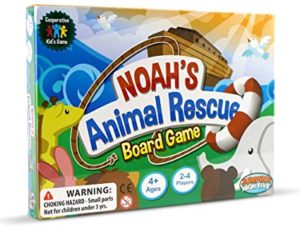
In this board game for kids, it’s a contest to acquire all of the animals on Noah’s boat beforehand the
excessive flood. Collect every animal together to conquest. Appropriate for two to four players, and
appropriate for kids age 4 and up. The box comprises one game panel, five animal tokens, thirty-six
terrain cards, one rain token, and thirteen rain cards. This makes a great gift for Christmas or other holidays including a birthday present.
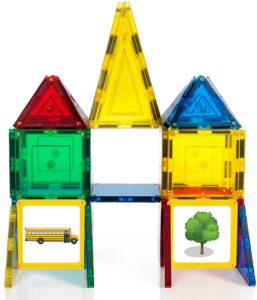
This forty piece game set consists of thirty-two magnetic tiles and eight style mags. The original
technology creates Stile Mags, simple accumulation of magnetic buildings as well as mosaics. Talk about a game that is friendly for all ages and imaginations! This one is sure to keep them (and maybe you) busy for hours on end creating magnetic magic!
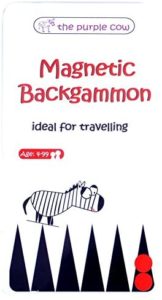
Appreciate the all-time typical game of Backgammon anywhere you go. No requirement for decks of
cards, sports, or additional action games. This game has you enclosed with long hours of
entertainment. This game is played between two players. It comes with all that you require to get on
the go, such as magnetic pieces, two dice, and the game board published ingeniously within the box.
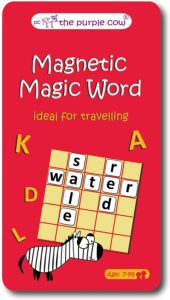
Appreciate the typical game of Words anywhere you go—no requirement for technology, phones, or
applications. Pick your head to come up with a word prepared from letters on your board. This game
can be played between 4 players.
Board games and the like are at an all time high, especially those that are friendly on the go. Families are spending more time together and games that can be easily taken on a ride and don’t get upset when moving will continue to be at the forefront of shopping purchases this year and next. What is your favorite game to take with you which is missing from the list?
I know that when we are ready to travel outside our comfort zone again, I want to go somewhere affordable, but not break the bank getting there. Our girls are getting older and about the age where we can take them on longer trips they will remember. I want them to be able to explore like I wasn’t able to at their age. I long to give them culture and experiences at a younger age so they don’t go travel crazy like me when they are older. We are impatiently awaiting these rankings of the cheap, most trendy destinations or, conversely, the less known.
Here are the top 10 affordable places perfect for big adventures and visit in 2020.
10 Affordable Places to Visit in 2020
1) Ecuador
If South America is in your sights, you should consider Ecuador. A country of contrasts with its legendary volcanoes, its colorful colonial towns, and its seaside life punctuated by the Pacific Ocean, there is plenty to have fun! Very small between Peru and Colombia, Ecuador can be explored easily, quickly, and inexpensively. According to Lonely Planet, almost everything is within half a day of transportation. As much as Ecuador is a cheap destination, so are its famous Galapagos Islands.
2) Slovenia
The ultimate base camp for lovers of the outdoors, Slovenia, has carved out a place of choice in this list. Affordable, the “green heart of Europe”; reveals itself in several facets: a seaside town with Venetian beauties, Alpine passes in the sky, a forest of stalagmites, castles like fairy tales.
3) Argentina
Historically, Argentina is recognized as an economic destination. And she does not skimp on efforts to remain so! For example, foreign visitors who pay for their accommodation by international bank card are entitled to a refund of taxes or, even certain nationalities benefit from visas at reduced prices, underlines Lonely Planet. Hikers will find their challenge at the Perito Moreno Glacier and certainly at Aconcagua, while Buenos Aires is a real eye-catcher for art and culture lovers.
4) Southern Nile Valley, Egypt
When we talk about the south of the Nile Valley, we discuss the region between Aswan and Luxor. An essential stopover during a trip to Egypt, Luxor, is often the starting point for a cruise on the Nile, which is, according to Lonely Planet, an excellent way to travel economically. Often, food and other transportation are included, and the entrance fee to larger monuments is not very expensive. The longest river in the world is yours, desert adventures, temples, and ancient treasures.
5) The Maldives
Hard to believe, but the Maldives is becoming more and more affordable. Independent tourists are increasing, and that at the same time, a network of cheap accommodation is developing.
This is a BIG goal on my travel list because the beautiful pictures and stories I’ve heard of these islands. It’s quite a long airplane ride, but I believe Steve and I will visit here soon.
6) Albania
Albania is a very cheap destination that lurks right in front of our eyes! Even today, few tourists visit the last frontier of Europe. Bordered to the north by Montenegro and to the south by Greece, Albania offers hikes in glorious landscapes, tasty gastronomy, small historic villages, and unique archaeological sites.
7) Great Smoky Mountains National Park, United States
With more than 10 million visitors annually, Great Smoky Mountain National Park, straddling Tennessee and North Carolina, is far from a well-kept secret. Quite the opposite, it is the most visited national park in the United States. Entrance to the park is free, so it is an excellent option for an economical road trip or hiking trip. Especially since the Great Smoky Mountains are crossed by one of the longest and most famous North American trails: the Appalachian Trail.
8) Łódź, Poland
Łódź, Poland’s third-largest city, is a must-see destination. This former industrial city, once in decline, has transformed in recent years to unveil innovative architectural projects, street arts, and districts entirely dedicated to culture and entertainment.
9) Houston, United States
Houston offers one of the best value for money in Texas. Among other things, the Houston Museum District’s urban escapades allow you to visit the metropolis on foot through 19 museums, ten of which are free, and the EaDo district presents us with an outdoor street art gallery to visit in self-guided mode.
10) Naxos in Greece
An island known by the Greeks takes a scooter tour to enjoy the landscape and have a good time. It is one of the most beautiful of the Greek Islands and a short ferry ride away from the super famous Paros and Mykonos Islands, but stays under the radar for popularity. If you visit here, chances are you will get all the beautiful views you long for when on a Greek vacation.
Teaching kids mindfulness can be a very important skill they carry throughout their lives. While it’s important, not everyone realizes exactly how much of an impact it can make.
If you’re reading this, I’m guessing that you’re interested in implementing this in your home.
But where do you even start? It can be overwhelming to even imagine starting.
In this post, I’ll be going over what it is, the benefits, and how to get started. My hope is that you have some good tools under your belt upon reading.
Let’s get to it now, shall we?
How to Teach Kids Mindfulness
What is Mindfulness?
Before we can dive into it, I find it very important to understand what mindfulness even is. It’s a word that gets thrown around quite a bit, but not everyone understands it.
In short, it’s a mental state in which you are not only aware of yourself and surroundings, but you are not influenced by them.
More specifically, it means:
Being fully present in the current moment
Being fully aware of your thoughts, feelings, and actions
Being in complete control of how you think, act, and feel
There is a lot more to it than this, but it gives you an idea. It also includes being in a non-judgemental state to create a sense of calm.
Mindfulness Benefits for Kids
Now that you know what it is, why does it matter for kids? Isn’t this something that more adults utilize? While yes, that is true… teaching children this skill will serve as a huge asset throughout their lives.
You will see a huge difference in them not only as children, but as they grown into functioning adults in the coming years too.
Emotion Regulation
The first major benefit to mindfulness is that it will teach them to regulate their emotions. They will be able to pinpoint what emotion they’re feeling, how it manifests in their body, and how to find their center to control it.
This happens by:
Practicing breathing techniques to calm them
Gaining self-awareness to pinpoint what’s happening
There is much more to this but it can help with regulating anxiety, stress, and give them the ability to focus on what’s in front of them. (Which is why you might see this popping up in school a lot lately!)
Decision Making
Part of mindfulness is the ability to focus on yourself and limit influence from your environment. While this is something that is learned over time, kids can certainly learn to trust themselves to make a choice.
It is important to note that this is more of a long-term skill that is built, much like a muscle.
Positive Mindset
With enough practice, kids will train the way their brains work. They’ll see the world in a different light and gain a more positive outlook. They will have more patience with peers, gain self confidence within themselves, and honestly become a lot happier.
This happens by:
Reciting affirmations to build confidence
Practicing gratitude to gain a grateful outlook
Breathing techniques to help gain patience for siblings
Establishing a Mindful Routine
Once you understand mindfulness and the benefits, you can start establishing a routine! Having a routine is KEY if you want to make this a long-term practice.
Start with yourself, first
You absolutely need to start with yourself to set the example. You wouldn’t teach your child a new language without first knowing it yourself and it applies here too.
That said – you absolutely can learn it alongside your child to make it a family affair.
The main thing here is that you don’t want to implement it on your child without doing it yourself. You won’t be as infested in it as you won’t truly understand every aspect of it if you don’t experience it yourself.
Plus – helping yourself become more mindful is a gift too!
Let go of any expectations
After listing out the benefits, it’s easy to have an expectation of what will happen. The best thing you can do is let go of those. Do not see this as making life easier with any particular result.
Instead, approach it as a long term game that helps them in their day to day life.
Part of mindfulness is letting go of any and all expectations to cultivate a state of peace. You’ll find yourself stressed out if you try to uphold expectations.
Take it slow
Don’t try to do everything at once – it will only stress everyone out. Instead, choose 1 habit to focus on at a time and once that’s mastered, move onto the next one.
Also pay attention to your child and adjust as needed. If they truly hate a certain aspect, stop doing it. If they’re struggling, step in to help. Tweak it as needed.
Mindfulness Habits to Implement
Once you have a routine figured out, it’s time to choose what you’re going to implement first! There are a number of skills that will benefit your child, but here’s a few to get started.
Meditation
Meditation will help your child not only calm their emotions, but gain a large sense of self-discipline. This is best started as young as possible to avoid resistance as it is hard to do when you’re not used to it!
Have your child close their eyes, and take deep breaths. Once they’ve got that down, have them practice visualization as they meditate.
Some visualization ideas include:
Picturing your thoughts leaving through the top of your head
Imagining a ray of white light passing through your body that “spits out” rays of love to the world around you
Picturing a bright green handle that gets brighter as you take deep breaths
For younger children, consider coming up with more creative ways to help them enjoy the experience. You can also look up guided meditations for children – there are lots of great ones out there! The insight app is a great one for kids to listen to.
Gratitude
Another practice to start is gratitude. Take a few minutes everyday to express what you’re grateful for. You can start with simple phrases such as, “I’m grateful for my sister.”
As they get this down, have them get more descriptive. What specifically happened today that made you feel grateful? What did you appreciate about that moment?
This practice helps kids learn to appreciate the world around them much more. It’s hard to be miserable when you see the world through the eyes of appreciation.
Self-Awareness
Becoming self-aware is much like a muscle – it has to be built over time and at first, you’ll have no idea how to work it.
Start helping your child notice how they feel throughout the day. You can try saying things such as, “I can see you’re really angry right now, how does that feel in your body?” Encourage them to identify not only the emotion, but how their body feels too.
Over time, they will be able to identify this on their own.
Affirmations
Affirmations are AWESOME – they help kids get really confident. It’s a great morning routine idea, too. Make it a family habit to recite affirmation together.
Tip: Brainstorm a list of 3-5 different ones to focus on for 30 days, then start a new set. This helps your brain really solidify what you’re telling it.
You can start with these types of affirmations:
I am smart
I am strong
I am capable
I am loved
I am enough
I am learning
Feel free to tweak them as needed to make them more suitable for your child.
Final Thoughts
Mindfulness is such an important skill to teach kids, no matter what age they are. Mindfulness helps you to become fully aware of yourself and also your environment without being heavily influenced by it.
This skill helps kids to regulate emotions, make better decisions, cultivate a positive mindset, limit stress and anxiety, and so much more.
When you get started, take it slow and make sure you’re doing it too in order to set the example! Let go of any expectations and just go with the flow and experience it.
Start by building the habits of meditation, gratitude, affirmations, and gaining self-awareness. There are lots of habits you can implement, but these are a great start.
Do you teach your kids mindfulness? Tell us about it in the comments!

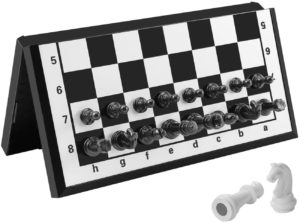 traveling. Offers silent environment for your analytical thinking.The pieces are stress-free to differentiate. The Chess set has an attractive wrapping with rules of the chess game available inside the box. Every distinct piece of the chessboard has a magnetic pull to the playing field of the 64-square chessboard, and light magnetic attraction would create it steady to play while not solid to transfer the pieces at the time of playing in stormy weather, out-of-doors or traveling. Small enough for travel in a backpack or bag, but large enough surface area for easy play.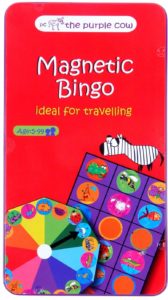
 technology, phones, or
Recent Comments