You might have a good relationship with people around you – be it your family, friends, or your partner. But, what about your relationship with yourself?
Yes, it is the forgotten road. Not everyone focuses on building a healthy relationship with themselves even when it’s so very essential.
But, why is it so necessary?
Because when you have a good relationship with yourself, you have the confidence to take up any challenge, grow and take the world by the storm. Additionally, a strong relationship is essential for happiness as well. You won’t find happiness in everything that’s around you but in yourself. You have to live inside your skin, and the better relationship you have within that skin, the better off you will be with the environment and people around you.
So, think through, ask yourself, do you have a strong relationship with yourself? If not, worry not, it’s never too late. Here’s a few ways we can help build it.
7 Steps to improve your relationship with yourself
1. Spend some quality time with yourself
You might like hanging out with your friends, your partner, your family, but what about hanging out with yourself? How about spending time with yourself to find peace and understand yourself better? Well, if you haven’t done that yet, do it now.
It will help you become happier and satisfied with yourself. You won’t look for anybody else to pass your leisure time with. So, go on and do what you like to do. Spend some time with yourself, whether it is something as big as taking a solo trip, or as little as going on a solo date.
I personally like to do this at least once a week, something new that’s not a normal routine, where I go by myself to do something where I’m the only one who needs the company and entertainment. It helps me get out of my head and focus on what I want. Sometimes it’s lunch where I sit and people watch, sometimes it’s a massage, other times, it’s a walk with the dogs outside to clear my head. Do what makes you feel good and it can be as often as daily depending on your schedule.
2. Pamper your body
What would be the one thing you’d like to change about yourself? Think through.
I bet most of you thought of a zero-size figure, flawless skin, frizzy hair. If you did, it’s a sign that you do not love your body enough when you should because your body is the vessel that contains you. It is sacred, it is divine.
Having said that, you have to love and worship your body even if people don’t. People don’t matter, YOU matter. Besides, people will always demand perfection – and you don’t owe anyone to be perfect.
So, go pamper yourself with a spa session, apply a face mask, moisturize skin, eat healthily – give your body the care it deserves.
3. Stand up for yourself and your needs
You don’t have to sit silent when someone is brutal to you. You don’t have to finish an extra file if it’s past your work time. And you don’t have to do something you are not comfortable with.
In short, you have to stand up for yourself. Trust me; no one will come to your rescue except you. At the same time, the world would not recognize and acknowledge your desires if you aren’t blunt about them. As they say, “If you want something, ask for it.” So, whether it is a raise or something else – ask away without the fear of being judged.
We have all had a rough couple of years, and it’s not going to let up any time soon. The sooner you stand up for yourself and not let anyone else put their needs before yours, the better off you will be and the more respect you will have for yourself.
4. Talk to yourself
I know what you might be thinking, and to answer that – No, talking to yourself is not being insane. In fact, ditch the notion that the world has set. If talking to yourself makes you feel better and lighter, there’s no reason you should think twice before doing it.
Doing so will not only be beneficial for your mental health but also it’ll reduce your dependence on people. Now that I have mentioned it, gulp down this bitter truth as well – people cannot be available for you all the time – they have work, they have their own life. So, it’s better to be there for yourself than expecting someone to be there for you.
I talk to myself all the time, it’s quite soothing and encouraging actually. I use it when I need to calm myself down, hype myself up, encourage myself, help reduce the anxiety, shut my brain off and just listen. And so many other situations. I especially use it when I’m working out to get the extra mile or rep when I don’t feel like I can push on. It helps me in so many different ways.
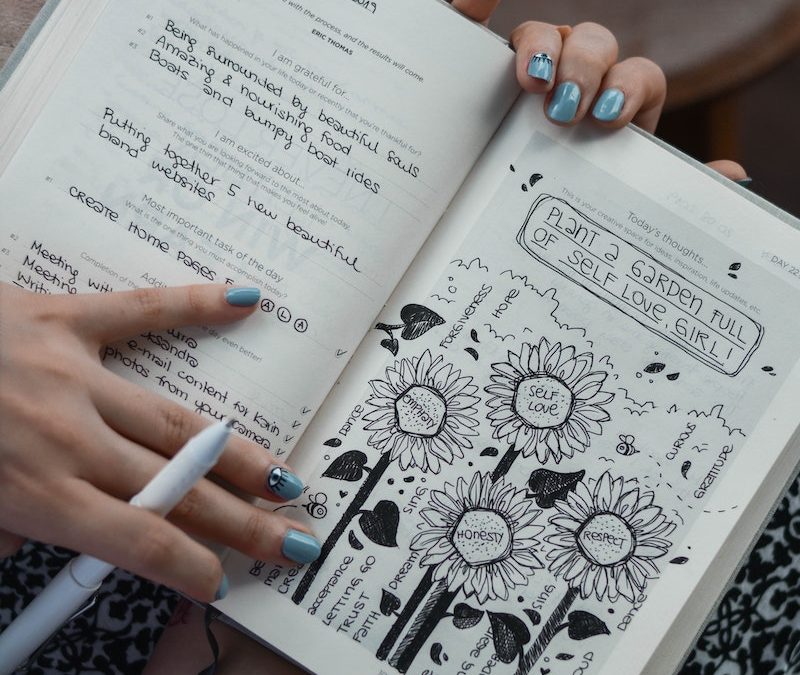
5. Make journaling your friend
I talked about reducing your dependence on others for your emotional needs; journaling is how you do that.
Journaling is ideal to improve mental health because it establishes and improves the relationship you have with yourself. If you feel that you have a lot to vent, or want to feel motivated, or be praised – there’s one solution, write it all out.
And don’t do it for just this once – make journaling your habit. Add it to your lifestyle. You can do so by including journaling in your morning or night routine. Fill a few pages every day and you’ll be the most peaceful.
I find when I’m the most stressed or emotionally charged, journaling allows me to get out everything I am feeling, without judgement of anyone else, and clear my mind. I don’t have to let anyone else see it. It doesn’t need to make sense, can be run on sentences and improper grammar, but it doesn’t matter because its just a brain and emotional dump to get out everything that needs out. I always feel better after journaling.
6. Help yourself, solve your own problems
Things can get tough, you might run into problems, but you don’t have to run to others to solve them. Be there for yourself. Try to solve your problems on your own. Pretend like there’s no one you can go to.
However, if it still doesn’t work out, then feel free to seek help. The idea is not to hesitate or be egoistic to ask for help, the idea is to try to help yourself first. Kids learn this early on when they are developing and learning to crawl or walk – we put the toy or object away from them and encourage them to figure out how to get from where they are to where they want to be, and ultimately encourage them to learn a new skill. It’s not any different, and you might even learn a little resilience you didn’t know you had!
7. Believe in yourself
At the end of the day, low self-worth comes from disbelief in yourself. The reason perhaps you don’t take up a challenge might be because you don’t believe that you can win it. So, the first thing is to believe that you can.
You can do that by suppressing your limiting beliefs, recollecting your past achievements, and being optimistic. All that might change your mindset for the better. Believing in yourself applies to every day life as well, it doesn’t have to be a special occasion or a big moment, apply it to all the moments and see how much change you find in your life.
Finally,
Building a healthy relationship with yourself is neither a one-time process nor a quick one. It takes a lot of time. In fact, it would be appropriate to say it’s a journey. So be patient, and start it. Don’t be impatient to reach the destination; it’s a journey to enjoy. Know that you will continue on the self love and self worth journey with each stage in your life, until you die, so why not start sooner than later?
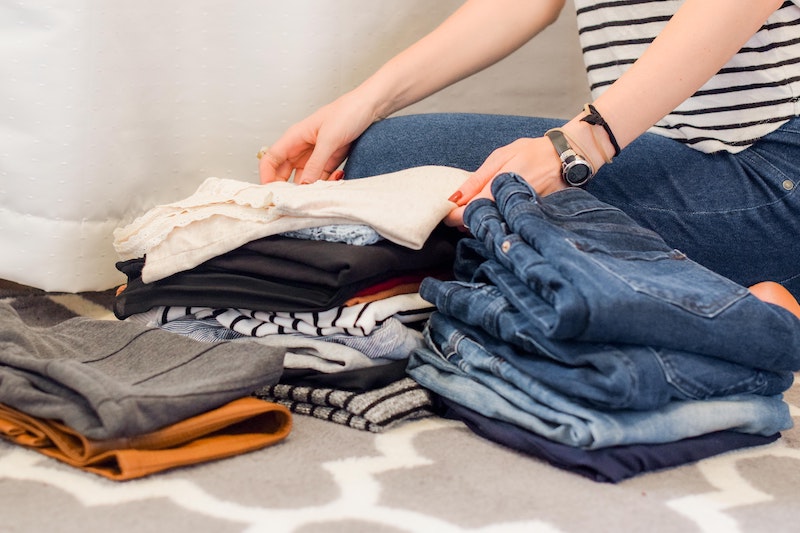
Do you open your closet and fall against your back beneath a pile of clothes? Do you take hours to find that top you want to wear? If yes, it means your closet is full of stuff you don’t need; and you need to declutter.
However, I do know that decluttering can be a struggle. I mean how often have you taken out, and put back clothes in a conflict? So, the point is, decluttering requires letting go. And as they say, letting go is not easy. Nonetheless, it’s important if you want peace. If you want to attack your whole house, I encourage you to read Marie Kondo’s book, The Life Changing Magic of Tidying Up. When I read this book the first time, my life completely changed. I found so much more space in my home and felt so much better about myself. I often revisit the principals and do my decluttering at least once a month. Let’s get started on a very easy, but also difficult area, your clothes. Here are a few tips I use often when I’m decluttering and deciding what to keep and not. These work well with anyone in your family, even the kids.
How to Declutter your Clothes
1. Separate the clothes you frequently wear, and those you don’t
Letting go of clothes requires a tough heart. But before you must get to that, how about starting easy?
So, the first step is to segregate the clothes you frequently wear, and those you don’t. The first batch is definitely the one you won’t have to let go of. While for the former, you know you have to. If you have seasons and want to start with clothes you haven’t worn all season, like sweater or jeans or dresses, this makes quick work.
Now the logic behind this segregation is, it won’t be much of a struggle with clothes you don’t wear and you don’t care about. These are the ones you can let go of easily. If you haven’t worn them all season, they go right into the pile, especially if the seasons are about to change. However, sometimes even that can be troublesome. If the struggle seems familiar, you might want to follow the next step.
2. Separate the ones that are worn out or those that don’t fit you anymore
Worn-out clothes – those that look old and ragged, or have threads pulling out, buttons broken, with tears- are easy to let go because there’s no reason to keep them – making the first lot that you can get rid of, easily.
Next, coming to those clothes that don’t fit you anymore. You might be tempted to keep them on a pretense that you’ll get back in shape. I often do this with workout clothes that are too big but still in good shape. I always think about how much money was spent on them and try to wear them again, even if they are falling down when I try to run. It’s honestly more frustrating and I always take that clothing item off, sometimes mid workout, and put it in the donate pile, because it’s so annoying. But I’m not going to gain the weight back or lose the muscle I have so I won’t fit into them again. You need to ask yourself the same, will you commit to a routine where you can wear them again, or not? Would you be able to exercise regularly? Would you be able to eat clean? Are you committed to achieving being able to wear the item again?
Be honest with yourself here. If you think you cannot fit into them again – let go. If you think otherwise, separate those clothes and give them a one-month timeline. During this month, you have to exercise, eat clean, and try to reduce the fat no matter what. If you manage to do that, feel free to keep them. If not – you know what to do.
3. Know where to donate your clothes
Kindness feels good. Sometimes when you know you are donating your clothes to those in need, your heart gets bigger. In other words, you let go without much of a struggle. So, if you want to seriously let go of clothes, and want to help someone, talk to an orphanage or social services regarding clothes donation. Once you do that, clothing donation would seem like an obligation (It’s a good thing).
Here in Arizona, there are drop off boxes for shoes, clothes, household items, books and similar items that benefit local charities. I feel better about taking my items that are still in good shape to these places because they do get a second life with someone who can use them. Obviously, if the clothes are stained or not in good shape, I don’t add them to the pile. Other items I take to Goodwill because they don’t fit into the above mentioned categories.
4. Ask yourself all the decluttering questions
Decluttering can be a struggle, but it can become fairly easy if you ask yourself the right questions. Here is the checklist.
“Do I really like this piece of clothing?”
“Do I wear these kinds of clothes?”
“Would I really have them altered?”
“Is there going to be a party anytime soon, where I can wear it?”
“Am I not letting it go because it’s in good condition, knowing that I don’t wear it?”
“Am I not letting go because it created a hole in my pocket?”
“Does this item bring me joy?” — Marie Kondo question
Once you ask these questions, it’s a no-brainer that you have to be honest with yourself. Nonetheless, if you are conflicted about the last two questions – trust me there’s no use in creating unnecessary space even when it’s in good condition. If you are donating, someone can use it. Secondly, if it was expensive, it’s in the past, you cannot get the money back, so there’s no point in holding it either. And if someone can use that expensive item and actually enjoy and use it, it’s serving them better than sitting in your closet collecting dust and taking up space.
This deserves another section because it’s something sensitive. Sometimes you don’t keep clothes because you think they’re in perfectly good condition, or you wasted money on them, but because those clothes are souvenirs of moments or people. Holding onto these items can mean you are not moving on.
So, ask yourself, “Is it the right thing to do?” “What are other ways I can remember this person or moment?” Sometimes, you can look in your phone and find a photo of the clothing item, the person or experience, and keep the memory that way versus the clothing item.
It’s you who has to make the call.
Lastly, Make it a routine
You might want one piece of clothing really bad this month, but a few months later, you might even forget about it because you wouldn’t like it anymore. It’s human nature – we get bored and tired of things, especially clothes, that’s why we keep buying new, not because we own fewer of them.
So, it is highly suggestible to evaluate your clothes every now and then, make it a routine. Trust me, decluttering cannot be a one-time process, because of the same reason mentioned above, and because we own too much. We change, clothes change, as do the seasons. It’s important to remember it’s ok to change and want different things, just remember to sort out your closet as much as you change your mind.
Nonetheless, once again, to make it easier, you need to ask yourself all the right questions. (The ones I listed above, in the previous section) and answer honestly.
Hey there, do you find decluttering hard? Feel free to share your views and ideas with us in the comment section.
It’s no secret that road-tripping the Southwest is considered a love affair for desert lovers. Home to a vast array of varried landscapes and drool-worthy scenery, this region of the United States has a little bit of everything to offer visitors.
If you’re currently planning your first visit to this stunning region, it might be overwhelming to plan the process. Seriously, with so many astounding destinations to choose from, how do you even begin narrowing down where to go?
Here’s a little reality check for you: One single trip to the Southwest isn’t enough to even start scratching the surface. The good, news, though? You’ll become addicted to traveling the region. And will definitely start plotting a return as soon as you get back home. Which is how I ended up moving from Indiana to Arizona back in 2013 :).
From Moab’s awe-inspiring desert charm to the never-ending sand dunes of White Sands National Parks, these are the 6 places you need to visit in Southwest USA to tackle on your road trip!
6 Places You Need to Visit in Southwest USA
1. Moab, Utah
Ever wondered what a trip to Mars would look like? Even though visiting outer space isn’t a possibility (yet), a visit to Moab is as close as you can get to it. Think enormous sandstone spires towering high above the sky, weird rock formations lining the panorama, and red rock canyons decorating the scenery to get a pretty good idea of what visiting Moab’s national parks is like.
Whether you’re keen to tackle easy trails to get a taste of what hiking in the desert is like or you want to challenge your legs on a serious backpacking adventure, what makes Moab one of the best destinations for first-timers in the Southwest is the fact that it’s got a little something for everyone to enjoy.
From going in search of natural arches at Arches National Park to doing some serious backcountry hiking in The Needles District at Canyonlands or trying your hand at rock climbing, there is no shortage of bucket-list-worthy things to do at this magical desert haven.
2. Valley of Fire State Park, Nevada
Ancient petroglyphs spread all over the place, red sandstone rock formations illuminating the valley, and an epic landscape coated in hues of pink, red, and orange? Yes, please!
Set in the heart of the Mojave Desert, Valley of Fire is home to 46,000 acres of red Aztec sandstone. Which make the entire landscape look almost like it’s, well… on fire.
Even though its name may not make it sound like the friendliest place to visit, Valley of Fire State Park actually happens to be one of the best destinations for first-timers hiking in the desert. That’s because most of the trails here are short and sweet.
Choosing what trails to take depends on your interests. But for the best petroglyph sightings, the Atlatl Rock Trail and Mouse’s Tank Hike are superb options. If you’re feeling more up in the mood for some seriously striking vistas, the Fire Wave Hike and the Rainbow Vista Trail are both guaranteed to get your mouth dropping right to the ground.
If you’re not too keen on hiking, though, that’s cool! You can always check out the park’s main highlights by driving down Mouse’s Tank Road. Which provides some of the top viewpoints in the park so you can check out the highlights without having to break a sweat.
3. White Sands National Park, New Mexico
Although small, White Sands National Park is home to a vast array of epic sights and fun things to do. Set in the heart of the Tularosa Basin, this national park is home to 275 square miles of wave-like dunes of gypsum sand. This makes it the world’s largest gypsum dune field. Fun fact: Unlike regular sand, gypsum sand doesn’t get very hot. Which means it’s perfectly comfortable to walk barefoot on the dunes at White Sands!
During your visit, make sure to walk on the Interlude Boardwalk to discover the flora and fauna of the area (yep, you wouldn’t expect it in the desert. But lots of animals and plants call White Sands their home, including foxes, bobcats, and porcupines).
Another super fun thing to do while visiting is to buy a sled and host a sliding competition with your travel buddies. Before you leave, make sure you also book a spot at the Sunset Stroll. Which is a ranger-guided walk where you’ll get to learn all about White Sands’s unique geology. As an added bonus, the program is timed to finish at sunset. Which will give you the chance to get a breath-taking view of the sun disappearing into the mountains.
4. Sedona, Arizona
A long, long time ago, geological forces cut rifts deep into what we now know as the Colorado Plateau. As a result, Sedona’s incredible landscape was formed. Desert spires piercing right through the clouds, striking river canyons. And labyrinths of red rock formations are just a few of the sights that make Sedona such an awe-inspiring place to witness.
During your visit, don’t miss out on ticking off a few of the hiking trails on the menu (there are more than a hundred of them on offer), camping (or glamping, of course) under a billion stars, and get your nerd on by visiting a few of the museums in town to learn all about Sedona’s history and heritage (The Sedona Heritage Museum is an absolute must in your itinerary!)
5. Mesa Verde National Park, Colorado
Tucked high above in the cliffs of western Colorado, Mesa Verde National Park is one of the most unique destinations to visit in the Southwest, especially if you’re keen on learning about the native history of the area.
Even though no one really knows what led to the collapse of the area’s society way back in time, today, you can learn all about Ancestral Puebloans by exploring the ruins they left behind.
Don’t let its small size fool you. Bryce Canyon may be one of the tiniest national parks in the United States, but it still has plenty of wonderful things to see and do.
Hoodoos (also known as fairy chimneys) are the staple of Bryce Canyon, and the best way to see them is by bearing the famous Queen’s Garden to Navajo Loop trail. Even though it’s not actually very long, this hiking trail will have you winding your way through rock tunnels that look out of this world, pine forests so beautiful you won’t believe, and the iconic sandstone hoodoos that look as though they belong on an entirely different planet.
If you’re not too keen on going on a hike, though, Bryce Canyon can also be explored from the comfort of your car. Grab your keys and drive all the way down to Rainbow Viewpoint. On the way back, go slowly and stop at the 13 viewpoints on offer, all of which are guaranteed to leave ooh-aah-ing.
I hope this list of the best destinations in the Southwest helped you plot the perfect itinerary for your visit. Honestly? An entire lifetime would not be enough to tick off every place in your bucket list, but these destinations are a wonderful way to start getting acquainted with the area (trust me on this one: you’ll definitely be back for more Southwest adventures!)
Spending your vacation in a different place can make you feel alive, stress-free, peaceful, and most importantly, glad that you exist to experience all the pleasures of life. In short, traveling can give you a lot of epiphanies that might have a tremendous impact on you. You can have memories that last for the rest of your life.
No doubt that some places can leave you a lot more than memories, but pause, think – what are the things you’re leaving behind? How can you impact the places and the people who live in the place? Are you making a bigger impact on their environment than your memories?
Don’t fool yourself saying – Nothing. The impact of your choices is significant upon several people. That’s what ethical traveling is about. It’s about being mindful of your choices and their consequences on other parties.
For instance, you might love to go for an elephant ride, but did you ever wonder as to what it does to the animal’s life? If you think about it, you’re only encouraging animal abuse without realization.
Ergo, the takeaway is that ethical travel is being conscious and considerate while making travel choices. So, if you want to follow the righteous path, here are a few tips that can help.
10 tips for ethical travel
1. Support local businesses
By availing services of big international brands, you are only making the rich richer. Not only that, you are contributing to an increased carbon footprint. Wondering how?
Every demand that these international brands get, is followed by excessive exploitation and consumption of natural resources – such as fuel for transportation.
Having said that, opting for local services – such as dining in a local restaurant, and shopping from local markets would, etc. – this will be a relatively sustainable choice. You’ll be also aiding such ventures financially. Not only are you supporting the local economy to continue for future generations to enjoy, you also often times get to live and experience the location like a local, my favorite way to travel.
2. Use resources consciously
Traveling doesn’t mean you get to use resources limitlessly. You might not be charged for extra consumption but you will definitely consume resources excessively that we do not have in abundance, to begin with. This includes your hotel’s AC, TVs, lights, and other items such as paper napkins that are produced by cutting down trees.
Our first experience with this was when we traveled to Mo’orea for the first leg of our honeymoon in 2015. We had to insert our room key into a slot by the door to have the electricity come on otherwise it didn’t work. It made us more conscious of the energy we were using and reminded us that when we left the room, everything would turn off. This was our cute little hut! –>
Sometimes, it’s the little things that make the biggest difference.
3. Embrace local culture
Everything is not about money; it’s about respect that you owe to the culture you are a part of when you are traveling. Embracing local culture might not affect you tremendously, but it will, to the locals. They will not only be happier, and smiling, but they will be aided financially if you are supportive of their culture.
So, every time you are traveling, have a taste of the culture you are in. Even if it is as simple as trying their authentic dishes, going to tours, engaging with them, or indulging in cultural activities.
4. Respect the wildlife
Sometimes it can be a tug of war between respecting a culture and respecting the wildlife. In that case, go with wildlife. For instance, in some cultures, camel rides, elephant rides are considered integral, but they are also animal abuse – you can’t support that, can you?
5. Look what you can give out
When you are traveling, it’s a great idea to give tips to those who serve you. You can of course support them financially – some would need it. However, be mindful. Don’t always give out money as some would misuse it. If you can, try to give out food, or clothes to those in need in that scenario.
6. Learn the language and respect the culture
Perhaps learning the local language would not be beneficial for you. But it’s okay. You can simply learn the language out of respect for the culture. With all the technological advances, downloading an app to help you translate or even learn the language of the place you are visiting is very easy. It even helps people, like my husband, who hasn’t ever spoken a word other than English to understand at the very least, what they are eating.
7. Be mindful of somebody’s privacy and convenience
I know meeting different people, being a part of different cultures can be exotically exciting; but being mindful of people’s privacy is equally important. You cannot do things at your convenience – this includes clicking photographs of people without their permission, bargaining beyond a limit, asking locals for favors they might not be up for.
8. Book tours
When you want to know about a culture, tours are your best shot. Thus, if you decide to take tours, go for local operators or family-owned companies to make sure the funds can be used by the local community.
A great way to experience the local culture is by booking with a local, and you can do so even easier than before with AirBnB Experiences. I myself am a host for AirBnB on the housing side. There is this whole other side to AirBnB that lets you pick from photo tours, cooking classes in the culture, painting, and other experiences depending on the location. We visited Oahu in November 2020 right after they reopened and found a cute couple who took our family photos for Christmas. It was really easy. They made the recommendation of the perfect spot, the right time for sunset, and were photographers so we got professional photos in an authentic spot, like this one here –>>>>>>>
9. Buy souvenirs
When you buy souvenirs, you do more than just taking a piece of memory with you. You support local artists and vendors that need the money more than you can realize.
Our favorite souvenirs to buy are wine, coffee, honey, chocolates, nuts, and actual things we can consume and enjoy back at home with family and friends about and share about our experience when we were traveling. It helps bring a sense that those around us were also included in the travel, and creates a memory for them. Not just a t shirt or stuffed animal that they will soon grow out of.
10. Be polite to the locals
Politeness is an underrated quality. Nonetheless, it is what you should do when you are engaging with locals. While you are at it, it’s equally essential to watch your body language than words and tone. Sometimes, even when you don’t intend to, your body language can make you look different. That’s the last thing you would want, right? So be mindful of every word, and every expression.
Before we leave,
Cheers to you if you already follow these tips and identify yourself as an ethical traveler. If you do not, it’s okay as long as you’re willing to make a change. Remember, it’s important to ensure you are leaving the place you visit as good or even better when you leave than when you arrived. We want travel to be sustainable and ethical for years and generations to come, so make sure to keep that in mind when traveling.
One of the secrets to a peaceful, stress-free, healthy, and productive life is a healthy nighttime routine. As breakfast is the most important meal of the day, your nighttime is the most important part of the day. The reason being – it’s the time your body sleeps and relaxes, to boost itself for the next day. What you do every night before bed could mean the difference between a good night’s sleep and not.
So, if you want to make your next day healthier and productive, you have to follow a nighttime routine to reap all the benefits. Here are all the things you need to do.
10 things you need to do every night before bed
1. Read a few pages
Want to relax and unwind? Reading is a great way to relax your mind and body. Not to forget, reading comes packed with benefits – for starters, you acquire knowledge, develop analytical, comprehensive, and critical skills. The list can go on but the point remains the same – reading is the best thing you can do for yourself.
While you are at it, do not finish the entire book in one night. You cannot compromise your sleep even when you are hooked to the book. Additionally, make sure you don’t read digital books, but paper books as they would be much healthier for your eyes.
2. Keep gadgets away
We have been told for ages that long and continuous exposure to gadgets is not good for the eyes and brain. They are not good for your sleep either as the blue light from the screen can strain your eyes and affect your sleep quality.
So, make sure you keep gadgets away at least an hour before you sleep.
3. Turn on the diffuser
Want to have a calm and peaceful sleep? Diffusers are the answer. They have been a rage in recent years for the right reason – Essential oils in diffusers produce an aroma that can leave you enchanted and de-stressed in no time. Ergo – plug them in before you sleep. We use them in the girls’ room to help them wind down and actually get sleep right away instead of tossing and turning and not getting sleep. My favorite oil for them is Lavender because their problems are minimal compared to us adults, so Lavender is generally great for them. If you want to use doTERRA like we do, you can grab yours here. I use the Serenity Blend for Steve and I to help relax our minds and help us settle the problems we might be trying to get away from during the day.
However, if you are worried about electricity consumption – be assured that diffusers typically use little electricity. If you still would want a different alternative, you can go for room fresheners and tea-light diffusers. (If you choose the latter, make sure the tea-light is away from anything combustible – including curtains, sheets, and wooden surfaces.)
4. Prepare for the next day
Have a bag to set? Clothes to select and prepare? Vegetables to cut? Refill and refrigerate the bottle? Do them the night before if you want to spare yourself the morning rush. If you have kids to get ready, knowing what to make for breakfast and also how you will get them to school is important to plan so you leave on time.
5. Stay away from caffeine
Addicted to coffee? We all have been there and we all love it unconditionally. However, as much as you can’t keep yourself away from coffee before you sleep – you have to if you don’t want to stay awake like a night-owl. Having said that, ban all caffeinated products, including green tea as it contains trace amounts of caffeine.
6. Plan the next day
Have lots of tasks to do tomorrow? Plan your day ahead. Prepare a to-do list and a schedule to stay motivated and productive the entire day.
7. Do Breathing exercises
Do you know why Yoga and meditation are life-changing? Because they include breathing exercises. Ergo, if you cannot indulge in meditation at night, do a five-minute breathing exercise before you go to sleep – Not only will it relax your body and mind but will also improve your body functions through an increased supply of oxygen.
8. Stretching
Stretching in the morning certainly has its own benefits, but stretching before you sleep is no less beneficial for your body and sleep. Stretching can increase blood circulation, relieve muscle tensions, and can even make you feel more relaxed.
However, ensure that you do not indulge in workout-like stretches – be gentle, you don’t need to get your body alarmed – you have to relax it.
Bear hugs, Knee-to-chest, Spinal twists, Child’s Pose, Butterfly stretch are some of the ones you can try for a good night’s sleep. If you need a better routine and want to do yoga classes, or even foam rolling, I love my Peloton app for that exact thing. Use this link to get 60 days for free!
9. Remove make up- Do some skincare
Your skin goes through a lot during the daytime – the stress, pollution, dust and dirt, whatnot. The least you can do is take care of it at the end of the day. For starters, remove your make-up, apply a face pack, and moisturize your skin. Aka give your skin the care it deserves.
10. Lastly, some tips to improve sleep quality
Make it a rule to sleep at least 8 hours a day. Go to bed early if necessary to achieve that goal, or sleep late if you are more of a night owl. Here are some additional tips that can help you have that sound and deep sleep you wish all night.
Sleep in total darkness – Close the curtains
Make sure your bed is cozy.
The room is cool.
Sleep with an eye mask. – Our favorite one here which Steve uses nightly and I use when we travel.
Play calm noises in the background.
Refrain from midnight snacking.
Exercise during the day.
Have a few more tips to share? Feel free to enlighten all of us in the comment section. You are most welcome there.

 spending time with yourself to find peace and understand yourself better? Well, if you haven’t done that yet, do it now.
 don’t have to do something you are not comfortable with.

 other words, you let go without much of a struggle. So, if you want to seriously let go of clothes, and want to help someone, talk to an orphanage or social services regarding clothes donation. Once you do that, clothing donation would seem like an obligation (It’s a good thing).

 as close as you can get to it. Think enormous sandstone spires towering high above the sky, weird rock formations lining the panorama, and red rock canyons decorating the scenery to get a pretty good idea of what visiting Moab’s national parks is like.
  coated in hues of pink, red, and orange? Yes, please!
  Tularosa Basin, this national park is home to 275 square miles of wave-like dunes of gypsum sand. This makes it the world’s largest gypsum dune field.
  incredible landscape was formed. Desert spires piercing right through the clouds, striking river canyons. And labyrinths of red rock formations are just a few of the sights that make Sedona such an awe-inspiring place to witness.
 in the Southwest, especially if you’re keen on learning about the native history of the area.
  plenty of wonderful things to see and do.
 increased
  TVs, lights, and other items such as paper napkins that are produced by cutting down trees.
 some would need it. However, be mindful. Don’t always give out money as some would misuse it. If you can, try to give out food, or clothes to those in need in that scenario.
 need the money more than you can realize.
 benefits – for starters, you acquire knowledge, develop analytical, comprehensive, and critical skills. The list can go on but the point remains the same – reading is the best thing you can do for yourself.
 reason – Essential oils in diffusers produce an aroma that can leave you enchanted and de-stressed in no time. Ergo – plug them in before you sleep. We use them in the girls’ room to help them wind down and actually get sleep right away instead of tossing and turning and not getting sleep. My favorite oil for them is Lavender because their problems are minimal compared to us adults, so Lavender is generally great for them. If you want to use doTERRA like we do,
  indulge in meditation at night, do a five-minute breathing exercise before you go to sleep – Not only will it relax your body and mind but will also improve your body functions through an increased supply of oxygen.
Recent Comments